

How to Choose the Right Emcee for Corporate Events
- Published: June 7, 2026
What is a Corporate Emcee?
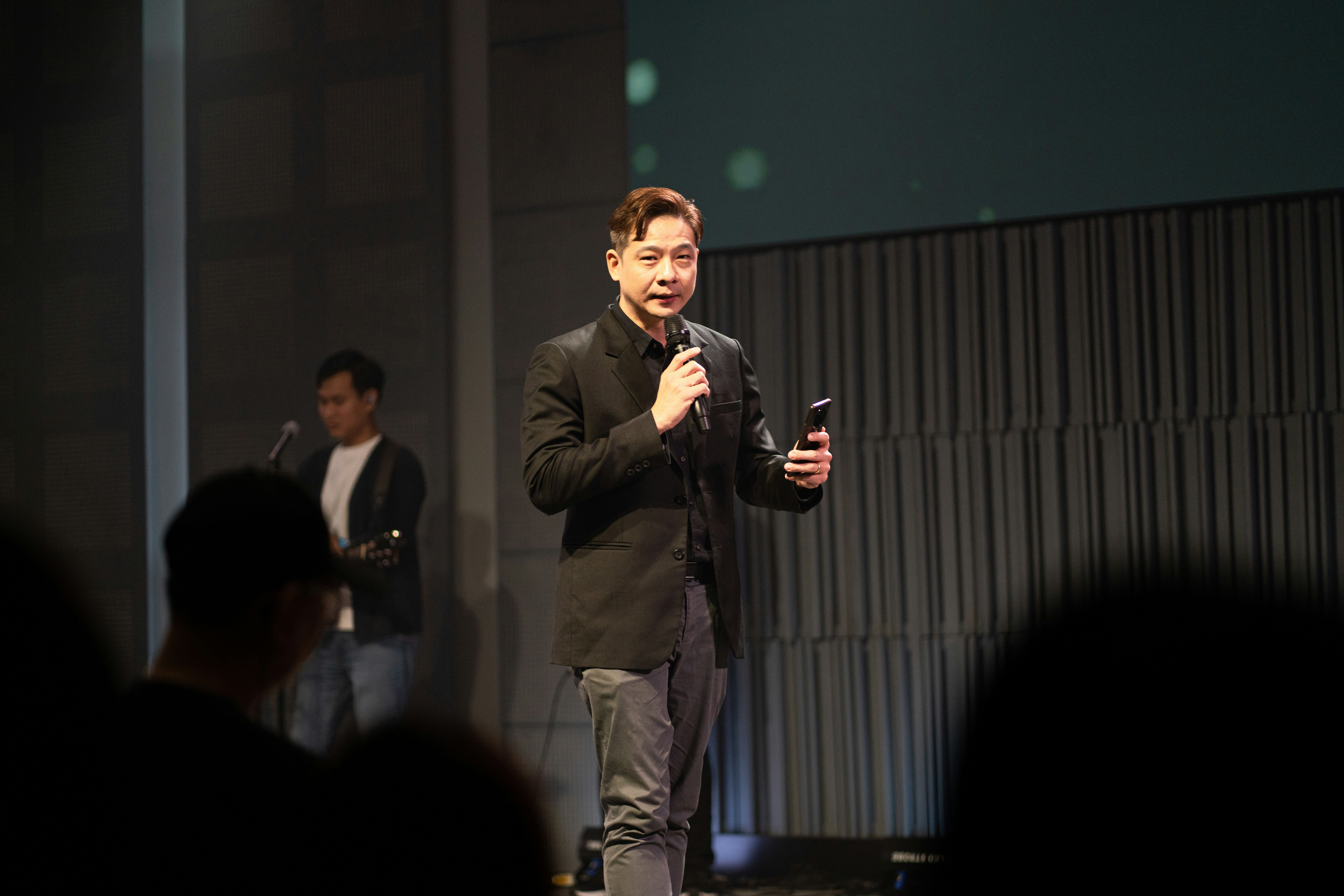
A corporate event emcee (Master of Ceremonies) is a professional moderator who manages audience engagement, transitions, and pacing to ensure an event aligns with its strategic objectives.
An emcee fundamentally shapes a corporate event’s atmosphere and audience engagement. Beyond standard speaker introductions, a professional Master of Ceremonies actively manages audience energy, steers seamless transitions, and maintains a strict programme timeline across conferences, product launches, town halls, and gala dinners.
While stage presence and entertainment value are important, a successful corporate event experience relies on four critical pillars:
- Strategic Communication: Aligning the messaging with corporate values.
- Audience Mapping: Adapting the tone to fit executive or general attendee demographics.
- Panel Moderation: Guiding Q&A sessions and keeping discussions concise.
- On-Site Coordination: Partnering with event planners and AV teams to manage real-time schedule shifts.
Ultimately, hiring the right corporate emcee bridges the gap between a well-planned schedule and an executive-level, highly organized event experience.
Different Events Need Different Emcee Styles
Not every corporate event requires the same type of emcee.
The tone, pacing, audience interaction, and communication style should usually match the format of the event itself. An emcee who works well for a gala dinner may not necessarily feel suitable for a leadership town hall or business conference.
The best emcee is often the one who fits naturally with both the audience and the overall event experience.
| Corporate Event Type | Recommended Emcee Persona | Core Competencies Required | Primary Operational Focus |
|---|---|---|---|
| Business Conference | Professional Structured Authoritative | Panel moderation, strict timekeeping, seamless speaker transitions | Maintaining event timeline and educational flow |
| Gala Dinner | Warm Polished High-energy | Stage presence, audience interaction, entertainment balance | Atmosphere curation and evening coordination |
| Product Launch | Dynamic Bold Brand-aligned | Presentation energy, high-stakes timing, reveal coordination | Maintaining peak audience hype and attention |
| Leadership Town Hall | Clear Composed Audience-focused | Internal corporate diplomacy, Q&A moderation, hybrid engagement | Connecting executives with multi-location teams |
| Networking Event | Conversational Approachable Low-profile | Organic icebreaking, social flow facilitation, low-profile hosting | Encouraging peer-to-peer communication |
What Makes a Good Corporate Event Emcee?
A premium corporate emcee functions as the operational anchor between the audience, speakers, and production crew. To secure corporate objectives, executive event hosts must excel across six core execution metrics:
Executive Communication Clarity: Corporate stakeholders demand precise, composed communication. Executive-level emcees command the room by eliminating conversational filler, delivering crisp transitions, and translating complex program changes into clear directives for attendees.
Active Audience Mapping: High-tier emcees systematically read room energy and alter their delivery style dynamically. They foster genuine engagement and participation without resorting to forced, awkward icebreakers that alienate corporate professionals.
Precision Pacing: Time mismanagement damages event ROI. Professional hosts control the literal rhythm of the day, adjusting their speech metrics and segment handling to keep long-form conferences running strictly on schedule.
Multicultural Professionalism: Large corporate functions often host international stakeholders, C-suite executives, and regional board members. The emcee must embody corporate diplomacy, maintaining composure under technical duress while respecting pan-Asian business etiquettes.
Operational Adaptability: Live events are highly volatile variables. Top-tier emcees act as tactical firewalls against schedule slippage, delayed presenters, technical AV faults, and sudden script revisions.
Advanced Panel Moderation: For strategic panel discussions, the host must transition from a solo presenter into a sharp panel moderator—balancing talk-time among panelists, steering debates away from tangents, and curating sharp audience Q&A sessions.
For leadership communication and large-scale hybrid programmes, structured town hall event planning can help improve audience engagement and communication flow across both physical and virtual environments.


Why Event Flow & Transitions Matter
1
Zero-Lag Speaker Transitions
Momentum Retention
Eliminating dead air and maintaining psychological engagement between major plenary sessions. The emcee sets the cognitive context for the incoming speaker before they step on stage.
2
Multi-Sensory Cue Timing
Technical Sync
Seamlessly synchronizing verbal cues with on-site show producers, AV engineers, lighting techs, and stage management teams to ensure flawless execution.
3
Audience Energy Mapping
Engagement Recovery
Dynamically adjusting presentation tone and crowd interaction to counteract predictable circadian energy drops, such as the post-lunch fatigue slump.
4
Strategic Session Pacing
Cognitive Balance
Balancing information-heavy keynote presentations with deliberate cognitive recovery gaps, ensuring attendees remain receptive throughout the entire program.
5
Cross-Functional Production Coordination
The Operational Bridge
Acting as the central link between the technical director's booth and the live speakers, absorbing real-time runtime adjustments without alerting the audience.
Hybrid & Large-Scale Event Considerations
Large-scale corporate summits and hybrid programs across Asia’s business hubs demand specialized host capabilities. Managing cross-border corporate events requires simultaneous coordination across physical venues and distributed digital environments.
- Cross-Border Livestream Moderation: Hybrid events require a host capable of managing multiple time-zone distributions concurrently (e.g., anchoring a live hub in Singapore while syncing remote satellite offices in Tokyo, Sydney, and Mumbai).
- Bimodal Audience Engagement: A premium hybrid emcee avoids the trap of treating virtual attendees as passive viewers. By utilizing live digital polling, dedicated virtual chat integrations, and direct camera-address techniques, the host treats both audiences as a singular entity.
- Remote Presenter Management: Technical handoffs between local stage presenters and international remote speakers via video link are historically high-risk points for lag. The emcee manages these handoffs seamlessly to retain overall momentum.
- Digital Interaction Coordination: Integrating real-time corporate Q&A apps (such as Slido or Pigeonhole) requires structured verbal framing. The emcee guides audiences safely through digital participation touchpoints to maximize high-quality feedback.
- Multi-Session Synchronization: For large conventions featuring concurrent breakout rooms, the primary emcee acts as the structural anchor—guiding movement across parallel tracks and keeping the macro-schedule cohesive.
Common Mistakes When Choosing an Emcee
The wrong emcee can affect audience engagement, event flow, and the overall professionalism of a corporate event.
Some common mistakes companies make include:
- The Comedy Trap: Prioritizing humor over structural moderation. While entertainment has value, an entertainer who lacks corporate diplomacy will struggle to manage a derailed timeline or facilitate a high-stakes executive Q&A.
- Misaligned Audience Fit: Hiring a host whose casual tone conflicts with an executive demographic. In regional APAC business cultures, matching corporate hierarchy and formal etiquette is paramount to maintaining brand prestige.
- Under-Developed Moderation Skills: Confusing stage confidence with actual panel moderation ability. A host without real moderation skills cannot probe speakers effectively or control dominant panel members.
- Lack of Enterprise Experience: Utilizing hosts who lack exposure to high-level corporate environments. Enterprise events involve complex stakeholder layers; an inexperienced emcee risks mispronouncing executive names or mishandling sensitive corporate narratives.
- Siloed Technical Coordination: Failing to hire an emcee who knows how to collaborate with technical show producers. Poor emcee-to-crew coordination causes missed cues, awkward transitions, and broken show-flows.
Frequently Asked Questions
What does a corporate event emcee do?
A corporate event emcee (Master of Ceremonies) serves as the structural and energetic anchor of an event. They manage audience communication, deliver polished speaker introductions, maintain the event’s precise pacing, guide seamless transitions between segments, and coordinate directly with the technical production crew to ensure the program runs exactly on schedule.
How do I choose an emcee for a corporate event?
When selecting a corporate emcee, evaluate candidates across four primary criteria:
- Industry Alignment: Do they understand your corporate culture, technical jargon, and brand values?
- Core Competencies: Do they possess advanced panel moderation skills or are they solely solo presenters?
- Audience Demographics: Can they adapt their tone to fit your specific attendee mix (e.g., C-suite executives vs. general staff)?
- Crisis Management: Can they demonstrate a proven track record of handling real-time technical delays and live program adjustments?
What is the role of an emcee in a hybrid event?
In a hybrid setup, the emcee functions as a cross-platform bridge. Their role requires balancing attention simultaneously between the physical room and the virtual stream. They must actively look into the camera lens to speak directly to remote viewers, manage digital interaction platforms (like Slido or Pigeonhole), smoothly hand off cues to international remote speakers, and ensure virtual attendees remain active participants rather than passive spectators.
What makes a good conference emcee?
A great conference emcee prioritizes structural flow over entertainment. They must be highly organized, articulate timekeepers who excel at active listening. This allows them to synthesize points between complex keynote sessions, keep panel discussions focused and concise, confidently introduce technical subject-matter experts, and manage tight corporate agendas without letting the schedule slip.
Is it better to hire a professional emcee or use an internal employee?
While using an internal employee or executive seems cost-effective, it introduces significant operational risks. Internal staff often lack formal training in microphone technique, crowd control, and technical cue synchronization. Furthermore, if the event faces sudden program delays or AV failures, an amateur host can easily panic on stage.
Hiring an external professional emcee safeguards your event’s ROI, protects your brand’s prestige, and frees up your internal leadership team to focus entirely on networking and executing their core business roles.
How much does a corporate emcee cost in Singapore?
Corporate emcee rates in Singapore vary widely based on the host’s profile, experience, and the scale of the event. Professional corporate emcees typically range from SGD 1,500 to SGD 3,500 for standard corporate functions, while high-demand media personalities, bilingual specialists, or veteran broadcasters hosting high-stakes international summits can command SGD 4,000 to SGD 8,000+ per event.
Table of Contents
Related Articles