

What Is an Award Ceremony? A Guide for Corporate Events
- Published: June 16, 2026
Quick Answer
An award ceremony is a formal corporate event that recognises achievement, employees, partners, or industry peers, through structured presentations, usually combined with dining, entertainment, and networking. Companies host them to reinforce culture, motivate performance, and celebrate milestones.
How meaningful the recognition feels depends heavily on production: staging, lighting, AV, and live cue management.
Recognition is one of the clearest ways a company shows what it values.
An award ceremony puts that recognition in front of the people who matter, employees, partners, clients, or an entire industry. Done well, it does more than hand out trophies.
It reinforces culture, motivates performance, and strengthens relationships in a single evening.
The difference between a ceremony that moves the room and one that feels like a formality usually comes down to how the experience is built, not the awards themselves.
This guide explains what an award ceremony is, why companies host them, what happens during one, and what separates a memorable recognition moment from a forgettable one.
Why Companies Organise Award Ceremonies
An award ceremony works best when it serves a clear business objective, not just an annual tradition.
The most effective recognition programmes are built around a specific purpose. That purpose shapes who is invited, how the programme is structured, and how the evening feels.
Employee Recognition
Reinforces company culture and rewards performance publicly.
Sales Achievement
Motivates teams and establishes performance benchmarks for the year ahead.
Long Service Awards
Recognises loyalty, strengthens retention, and celebrates commitment.
Partner Recognition
Deepens key business relationships and strengthens channel partnerships.
Industry Awards
Builds brand credibility and positions the organisation as an industry leader.
Company Milestones
Marks anniversaries and significant achievements in the organisation's journey.
Recognition that aligns with business objectives lands harder than recognition handed out for its own sake. When the audience understands why an award matters, the moment carries weight.
What Happens During an Award Ceremony
A well-run award ceremony has a clear sequence that builds anticipation, delivers the recognition, and ends on the right note.
01
Registration & Reception
Guests arrive, register, and move into the pre-event reception. Ambient music, welcome drinks, and early networking help set the tone before the formal programme begins.
02
Welcome Remarks
Brief opening remarks from a host or senior leader frame the evening, explain what is being recognised, and reinforce why it matters to the organisation.
03
Awards Presentation
The centrepiece of the event. Recipients are announced, walk on stage, and are recognised in front of the room. Strong cue timing, walk-on music, and lighting transitions are what make each moment feel significant.
04
Entertainment
Live performances, hosted segments, or audience activities maintain energy in the room and create rhythm between recognition moments.
05
Networking & Closing
Unstructured time allows guests to connect, congratulate recipients, and wind down. A clear and intentional close leaves a stronger final impression than guests simply drifting out.
Good flow creates anticipation. When the room knows something important is coming, each award lands with more impact.
Award Ceremony vs Gala Dinner
These two formats are often confused, and many corporate events combine elements of both.
The simplest distinction: an award ceremony is recognition-led, while a gala dinner is experience-led. One is built around the moment of recognition; the other is built around the overall evening.
Award Ceremony
Recognition-led
Awards are the main focus of the event.
Built around formal presentations and staged recognition moments.
Often shorter and more programme-focused.
Gala Dinner
Experience-led
Awards may be one segment within the evening.
Combines dining, entertainment, networking, and celebration.
Typically longer with a broader guest experience.
In practice, the line blurs. Many corporate galas include an awards segment, and many award ceremonies are wrapped inside a full dinner programme.
What matters is deciding early which element leads, because that decision shapes the venue, the run-of-show, and the production brief.
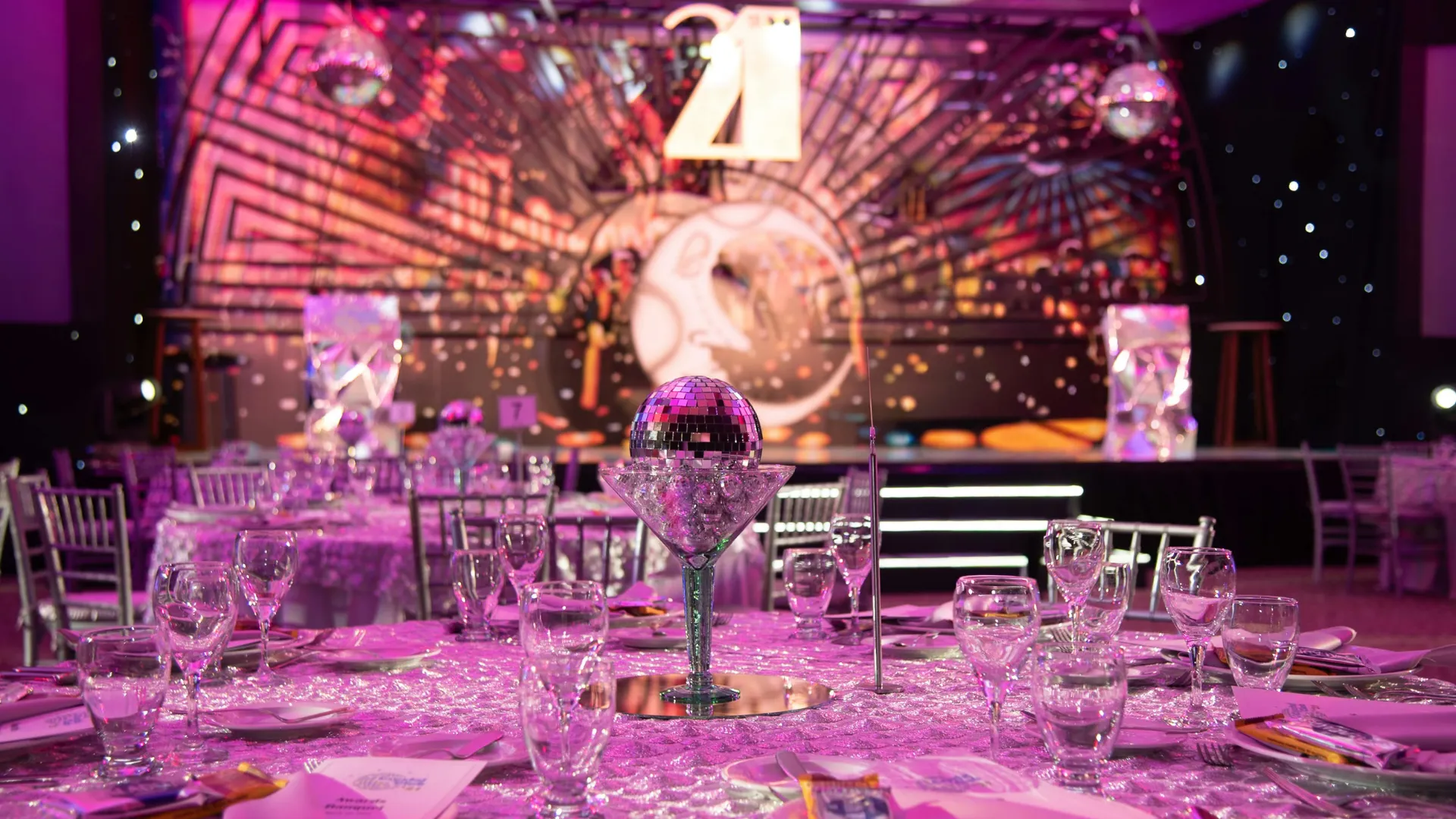

Production Makes Recognition Memorable
This is where most award ceremonies are won or lost.
Handing someone an award is simple. Making that moment feel significant is a production task. The recipient walking on stage to the right music, under the right light, with their name and achievement on the screen behind them, that is what the room remembers.
01
Staging
The stage is the focal point of every award moment. Its configuration, dimensions, and backdrop design set the visual standard for the evening and affect how recipients are perceived.
02
Lighting
The shift from ambient room lighting to a spotlight on stage tells the room something important is happening. Flat, static lighting removes that signal entirely.
03
AV Systems
Clear audio is non-negotiable. If the audience cannot hear the citation or recipient remarks, the recognition is undermined regardless of how well everything else is planned.
04
Walk-On Music & Cue Management
Music timing, video playback, lighting changes, and announcements must land in sequence. Seamless moments come from rehearsal and experienced real-time cue calling.
05
LED Walls & Visual Content
Recipient names, achievement summaries, brand videos, and walk-on graphics reinforce each award and keep the room visually engaged throughout the presentation.
ERS Asia handles end-to-end event production in Singapore for award ceremonies, awards nights, and corporate celebrations, covering staging, lighting, AV, and full live coordination.
Common Award Ceremony Mistakes
These issues appear consistently, regardless of event budget or company size.
Lengthy Presentations
Loses audience attention before the key awards and recognition moments take place.
Poor Audio Quality
Citations and recipient remarks go unheard, undermining the significance of the award.
Delayed Cue Timing
Creates awkward pauses precisely when energy and anticipation should be building.
Unclear Judging Criteria
Recognition feels arbitrary rather than earned, reducing credibility and impact.
Rushed Transitions
The most important moments feel hurried, reducing their emotional impact and memorability.
Weak Audience Engagement
The room disengages between awards, causing energy levels to drop throughout the programme.
The common thread: these problems come from treating the awards as a list to get through, rather than a sequence of moments to be designed and rehearsed.
Creating Meaningful Recognition Experiences
The awards guests remember are rarely about the trophy.
They remember the moment the room lit up, the music that carried someone to the stage, and the recognition that felt genuinely earned. Those moments are the product of clear objectives, strong production, and experienced execution on the night.
Whether it’s an awards night, a gala dinner, an employee appreciation event, or a corporate celebration, recognition works best when the experience is built with the same care as the award itself.
ERS Asia supports corporate event management in Singapore across award ceremonies, gala dinners, conferences, and corporate celebrations. See our work for examples of how we approach recognition and production across event types.


Frequently Asked Questions
What is an award ceremony?
An award ceremony is a formal corporate event that recognises achievement, employees, partners, or industry peers, through structured presentations, usually combined with dining, entertainment, and networking. Companies use them to reinforce culture, motivate performance, and celebrate milestones.
Why do companies organise award ceremonies?
To recognise performance publicly, strengthen culture, and motivate teams. The most effective ceremonies align with a clear business objective, such as employee recognition, sales achievement, long service, partner recognition, or a company milestone.
What is the difference between an award ceremony and a gala dinner?
An award ceremony is recognition-led, with the awards as the focus. A gala dinner is experience-led, built around the overall evening, where awards may be just one segment. Many corporate events combine both formats.
How long does an award ceremony usually last?
Most corporate award ceremonies run between two and four hours, covering reception, the awards presentation, entertainment, and networking. Ceremonies built into a full gala dinner programme typically run longer.
Do award ceremonies require professional production?
For events with multiple recipients, structured presentations, or a formal atmosphere, yes. Staging, lighting, AV, and cue management are what make each recognition moment feel significant, and these require proper planning and rehearsal.
Table of Contents
Related Articles