
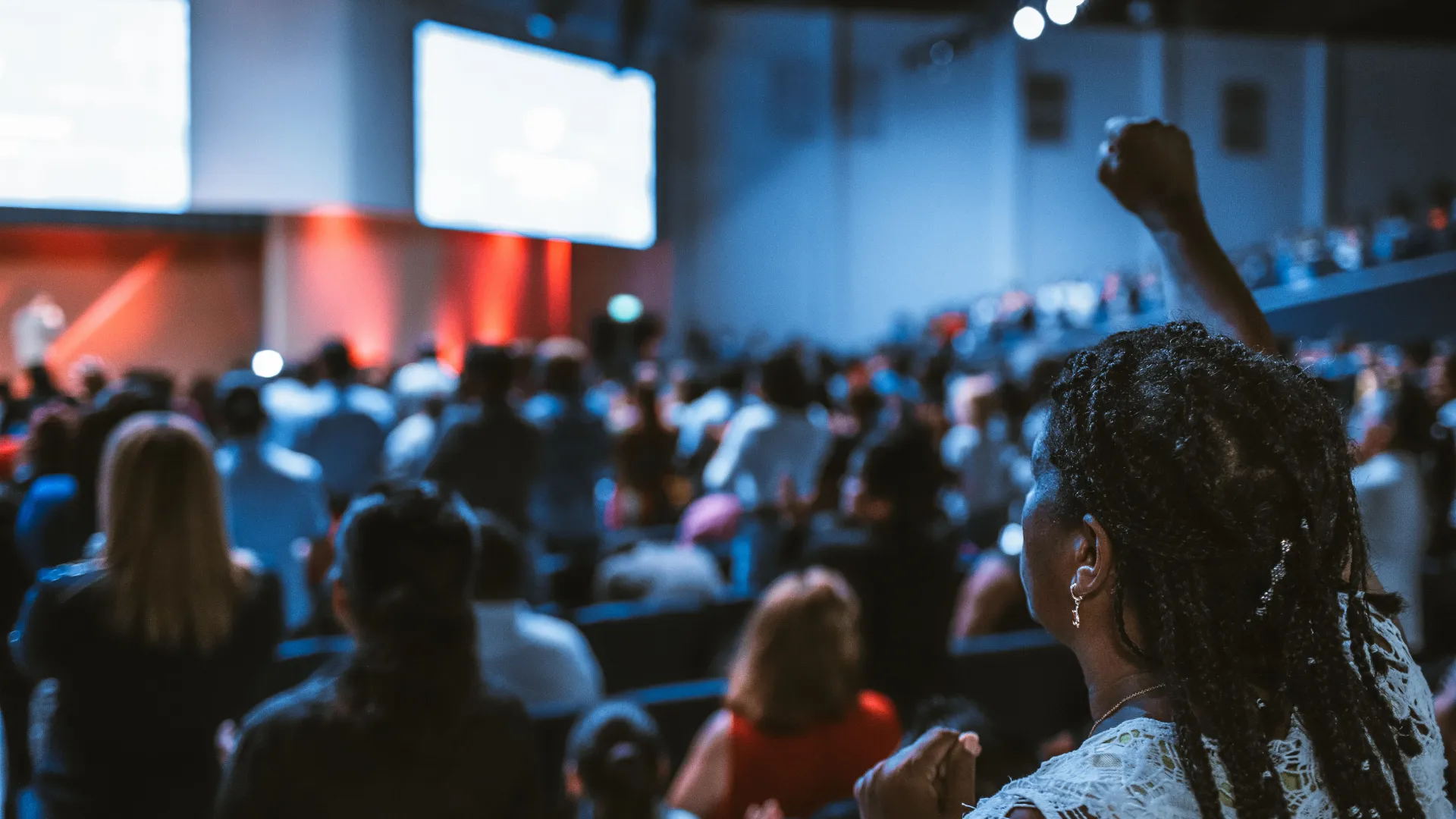
What Is AV Production for Events?
- Published: June 25, 2026
Quick Answer
AV production refers to the planning, setup, operation, and management of audio and visual systems used at events. It typically includes sound systems, microphones, presentation screens, LED walls, lighting, video playback, livestream support, and technical coordination that help audiences see, hear, and engage with content effectively.
Every event depends on communication. Whether a keynote speaker is addressing five hundred delegates at a conference, a CEO is delivering a company-wide message at a town hall, or an executive team is presenting at a product launch, the audience needs to see and hear clearly.
When they cannot, the message is lost regardless of how well it was prepared.
AV production is the system that makes communication possible at live events. It is often underestimated during planning and only noticed when something goes wrong.
Understanding what AV production includes, and why it matters, helps organisations make better decisions about how their events are delivered.
What Does AV Production Include?
AV production is not a single service. It is a combination of interconnected systems, equipment, and operational coordination that work together to support the event experience.
Audio Systems
Ensures speakers, presenters, and performers are heard clearly by all attendees throughout the venue.
Visual Displays
Delivers presentation content, branding, motion graphics, and video assets to the audience.
Event Lighting
Supports visibility, atmosphere, audience focus, and overall production quality on stage.
Video Playback
Manages pre-recorded content, opening videos, sizzle reels, award presentations, and transitions.
Livestream Support
Broadcasts the event to remote audiences in real time through virtual and hybrid event platforms.
Technical Management
Coordinates all production systems before, during, and after the event to ensure smooth delivery.
Each component depends on the others. Strong visuals are undermined by poor audio. A well-designed stage loses impact without proper lighting.
AV production succeeds when all systems are planned and operated together.
The Role of Audio in Event Experiences
Audio is the most critical and most frequently underestimated element of event production. An audience will tolerate imperfect visuals far longer than they will tolerate audio that is difficult to hear or understand.
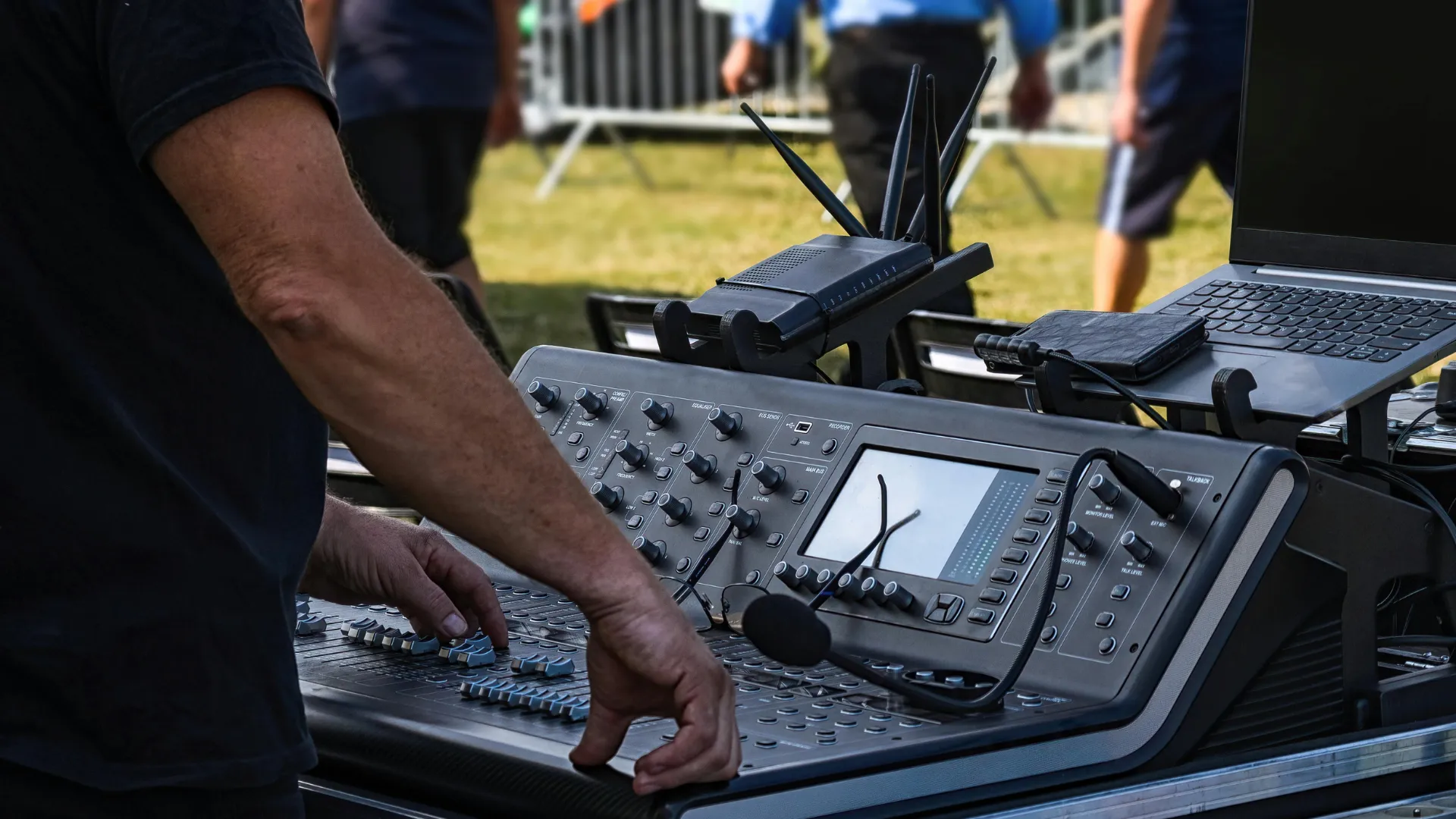
Professional audio production for corporate events typically includes microphone systems for presenters and panellists, PA systems calibrated for the venue’s size and layout, speaker coverage that ensures consistent sound quality across the entire room, and audio mixing that balances multiple inputs during the live event.
Poor audio quality has an immediate effect on audience attention. When attendees strain to hear a speaker, engagement drops within minutes.
When sound is inconsistent across different parts of the room, some audiences receive a fundamentally different experience from others. Audio planning is not simply about volume, it is about clarity, coverage, and consistency.
Venue acoustics also influence audio requirements significantly. A ballroom with high ceilings and hard surfaces behaves very differently from a carpeted conference room.
Professional AV production accounts for these variables during the planning stage, not on the day of the event.
Visual Production and Audience Engagement
Visual production supports communication by ensuring that presentation content, branding, and video material are displayed clearly and at the right scale for the audience.
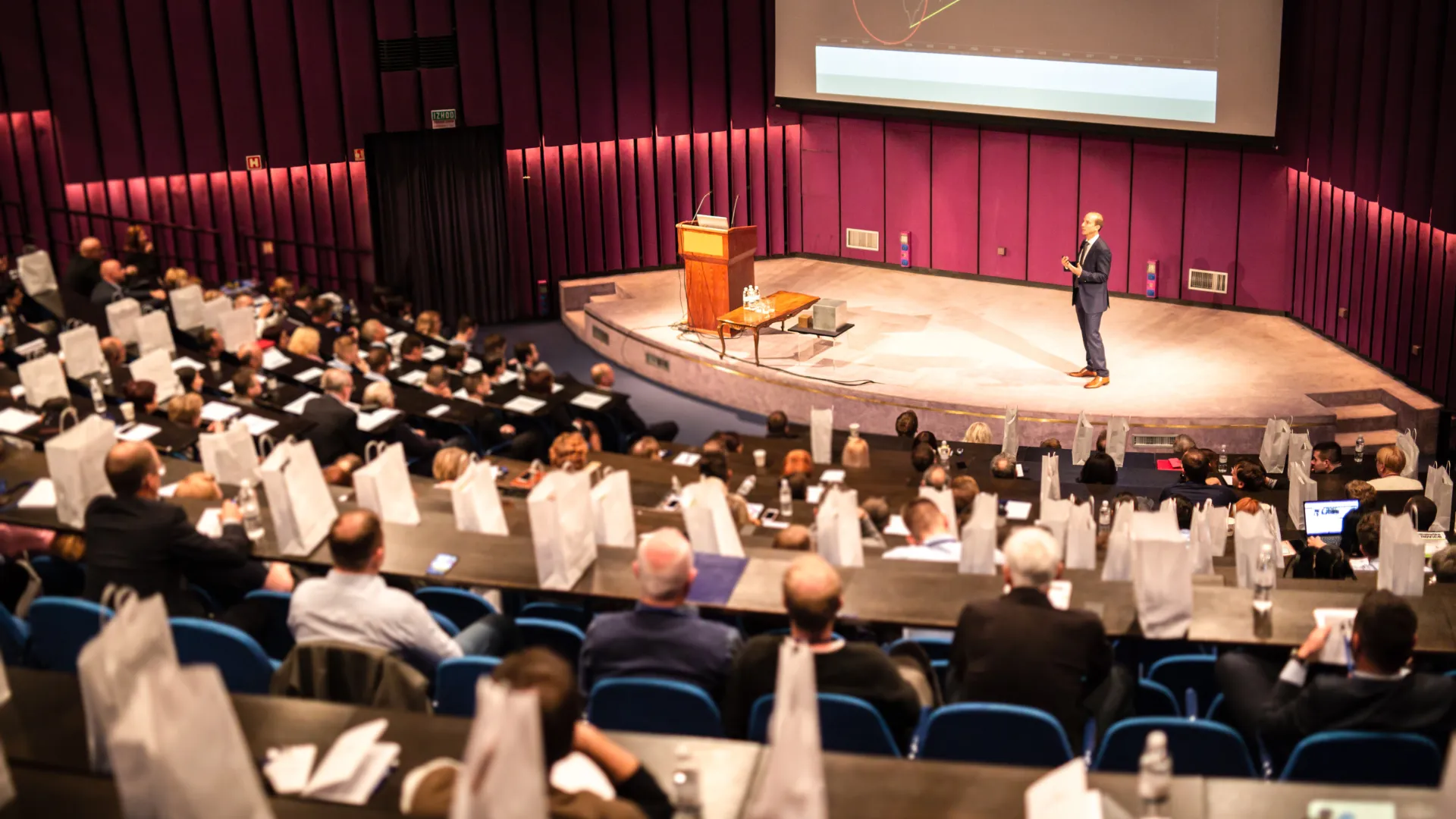
For most corporate events, this includes projection screens or LED walls for presentations, confidence monitors that allow speakers to see their slides without turning away from the audience, branding displays that reinforce the event identity, and video content that supports key messages or recognition moments.
The choice between projection and LED displays depends on the venue, ambient light levels, viewing distances, and content type. LED walls offer higher brightness and more flexibility in configuration, making them well-suited for large-scale events or venues with significant ambient light.
Projection remains effective in controlled environments with appropriate throw distances.
Screen placement is a planning decision, not an installation detail. Screens positioned too low, too far to the sides, or at angles that create sightline problems for portions of the audience will reduce the effectiveness of every presentation delivered from that stage. For more on how visual production connects with event staging, see our event staging guide for corporate events.


AV Requirements for Different Event Types
Different event formats create different AV requirements. Understanding these differences helps organisations plan more accurately and avoid under-specifying production support.
Conference
Stage Screens
Microphones
Presentation Support
PA System
Town Hall
Livestream
Audience Q&A Systems
LED Displays
Broadcast Cameras
Gala Dinner
Atmospheric Lighting
Entertainment Support
Awards Video Playback
Product Launch
LED Walls
Video Content
Live Demonstrations
High-Impact Audio
Hybrid Event
Broadcast Cameras
Streaming Infrastructure
Audience Interaction Tools
Town halls and hybrid events typically require the most complex AV setups because they involve both an in-room audience and a remote audience receiving the broadcast simultaneously. For a detailed look at town hall AV requirements, see our hybrid town hall event guide.
Why Technical Planning Matters
The quality of AV production at a live event is determined almost entirely during the planning phase. Equipment selection, venue surveys, signal routing, power requirements, and contingency planning all happen before the event day.
By the time an audience arrives, the opportunity to make fundamental changes has passed.
Professional AV planning for corporate events typically involves:
- Venue surveys to assess acoustics, power availability, rigging points, and sightlines
- Equipment planning based on audience size, room dimensions, and content requirements
- Signal routing to ensure audio and video signals reach every output reliably
- Power planning to prevent overloads or failures during the live event
- Contingency equipment to replace critical components if failures occur
- Technical rehearsals to test all systems together before the audience arrives
Most AV failures at corporate events occur because technical planning started too late. When production decisions are made in the final days before an event, there is insufficient time to identify problems, source alternative equipment, or conduct meaningful rehearsals.
For more on how rehearsals protect event delivery, see our article on why technical rehearsals matter.
Common AV Production Mistakes
Understanding common AV mistakes helps organisations ask better questions during the planning process.
Underestimating Audio Requirements
Inconsistent sound quality across the venue, making it difficult for attendees to clearly hear speakers and presentations.
Choosing Screens That Are Too Small
Reduced visibility for attendees seated further back, weakening content delivery and audience engagement.
No Technical Rehearsal
Undetected issues only become visible during the live event when there is little opportunity to recover smoothly.
Insufficient Backup Equipment
Creates single points of failure with no immediate recovery option if critical equipment stops working.
Poor Livestream Planning
Remote audiences receive a degraded experience, reducing engagement and communication effectiveness.
Weak Internet Connectivity
Livestream interruptions occur during critical moments, affecting both audience experience and message delivery.
Each of these mistakes is preventable. They typically occur when AV production is treated as a last-minute logistics item rather than a core component of event planning.
Creating Better Event Experiences Through AV Production
AV production is not a technical add-on. It is the infrastructure that determines whether an event communicates effectively or not.
A well-produced conference enables speakers to engage their audience. A well-produced town hall allows leadership to communicate clearly with employees across multiple locations.
A well-produced gala dinner ensures that recognition moments land with the impact they deserve.
The organisations that consistently deliver strong event experiences treat AV production as a planning priority rather than a procurement decision. They involve production teams early, conduct proper venue surveys, allow time for rehearsals, and plan for contingencies.
ERS Asia supports event production across conferences, town halls, hybrid events, gala dinners, and product launches. For a broader view of what professional event production involves, see our guide on what event production includes.
Frequently Asked Questions
What is AV production for events?
AV production refers to the planning, setup, and operation of audio and visual systems used at live events. It includes sound systems, microphones, screens, LED walls, lighting, video playback, and livestream infrastructure.
AV production ensures that audiences can see and hear event content clearly and that all technical systems work together reliably during the live event.
What does AV production include?
AV production typically includes audio systems, visual displays, event lighting, video playback, livestream support, and technical management. For corporate events, it also involves pre-event planning, venue surveys, signal routing, equipment testing, and technical rehearsals to ensure all systems function correctly before the audience arrives.
Why is AV production important for corporate events?
AV production determines whether an event communicates effectively. Poor audio causes audiences to disengage.
Inadequate visuals reduce the impact of presentations. Unreliable livestreams damage the experience for remote attendees.
Professional AV production ensures that the event’s communication objectives are supported by reliable, well-planned technical systems.
What equipment is used in AV production?
Common AV production equipment includes microphone systems, mixing consoles, PA speakers, projection systems or LED walls, confidence monitors, lighting rigs, video switchers, broadcast cameras, streaming encoders, and internet connectivity infrastructure. The specific equipment required depends on the event type, venue, audience size, and content requirements.
Do hybrid events require specialised AV production?
Yes. Hybrid events require AV production that simultaneously supports an in-room audience and a remote broadcast audience. This typically involves broadcast-quality cameras, dedicated audio feeds for streaming, video switching for live transitions, streaming platforms, and internet redundancy.
Hybrid AV production is significantly more complex than standard in-room production because two audience experiences must be managed at the same time.
Table of Contents
Related Articles