

Conference Engagement Ideas
- Published: June 29, 2026
Quick Answer
Conference engagement improves when attendees actively participate rather than passively listen. Techniques such as live polling, audience Q&A, networking activities, interactive sessions, and technology-enabled participation help increase attention, knowledge retention, and overall event satisfaction.
Attention is finite. Attendees arrive at a conference with genuine interest in the content, but that interest competes throughout the day with phones, emails, side conversations, and the natural fatigue that comes from sitting through consecutive presentations.
The conferences that hold attention are not necessarily those with the most impressive speakers. They are those designed to keep attendees involved.
Conference engagement is not about filling the programme with activities. It is about designing an experience where participation feels natural, interaction is built into the structure, and attendees leave feeling that their time was well spent.
That requires intentional planning, not improvisation.
Why Conference Engagement Matters
Attendees rarely remember every presentation from a conference. They remember how involved they felt, the conversations they had, and the moments where they were genuinely engaged with the content or the people around them.
From a business perspective, engagement affects:
- Knowledge retention, attendees who participate actively absorb and retain more than those who listen passively
- Networking outcomes, structured interaction produces more meaningful connections than unstructured breaks
- Speaker effectiveness, engaged audiences respond more visibly, which improves speaker performance
- Attendee satisfaction, conferences that feel interactive consistently receive stronger feedback than those that do not
- Return attendance, attendees who had a strong experience are more likely to return or recommend the event
Engagement is not a nice-to-have. It is a measure of whether the conference achieved its objectives.
Audience Participation Ideas
The most direct way to increase engagement is to build participation into the programme itself. When attendees are invited to contribute, their attention increases because they have a stake in what happens next.
Live Polling
Attendees respond to questions in real time, with results displayed instantly on screen to encourage participation.
Real-Time Q&A
Audience members submit questions digitally, allowing moderators to prioritise and organise discussions.
Audience Voting
Participants vote on topics, priorities, or discussion directions, making sessions more collaborative.
Interactive Surveys
Short surveys conducted during or between sessions capture immediate feedback and audience sentiment.
Mobile Event Apps
Provide a central platform for polling, Q&A, networking, agendas, announcements, and event content.
Question Submission Platforms
Allow attendees to submit and upvote questions before or during sessions, helping moderators address the most relevant topics.
Participation increases attention because attendees move from observers to contributors. Live polling is particularly effective because it creates a moment where every person in the room is simultaneously engaged with the same question.
For more on how conference planning supports engagement, see our conference event planning guide.
Networking Ideas That Create Better Connections
Networking is consistently cited as one of the primary reasons people attend conferences. Yet many conferences leave networking entirely to chance, a break between sessions where attendees stand around hoping conversations will happen naturally.
Structured networking produces better outcomes than unstructured time.
Roundtable Discussions
Small groups of attendees discuss a specific topic or challenge. The structure gives people a reason to engage and a framework for the conversation.
Hosted Introductions
Facilitators or event staff make targeted introductions between attendees with relevant shared interests or complementary objectives.
Industry Meetups
Designated networking sessions grouped by industry, role, or interest area, allowing attendees to connect with the most relevant people.
Breakout Sessions
Smaller group sessions that naturally create more intimate conversation environments than large plenary formats.
Networking Receptions
End-of-day or post-conference receptions where the social context makes introductions feel more natural.
The principle behind all of these is the same: networking should be facilitated, not left entirely to chance. The event design should make it easy for people to start conversations, not assume that they will.

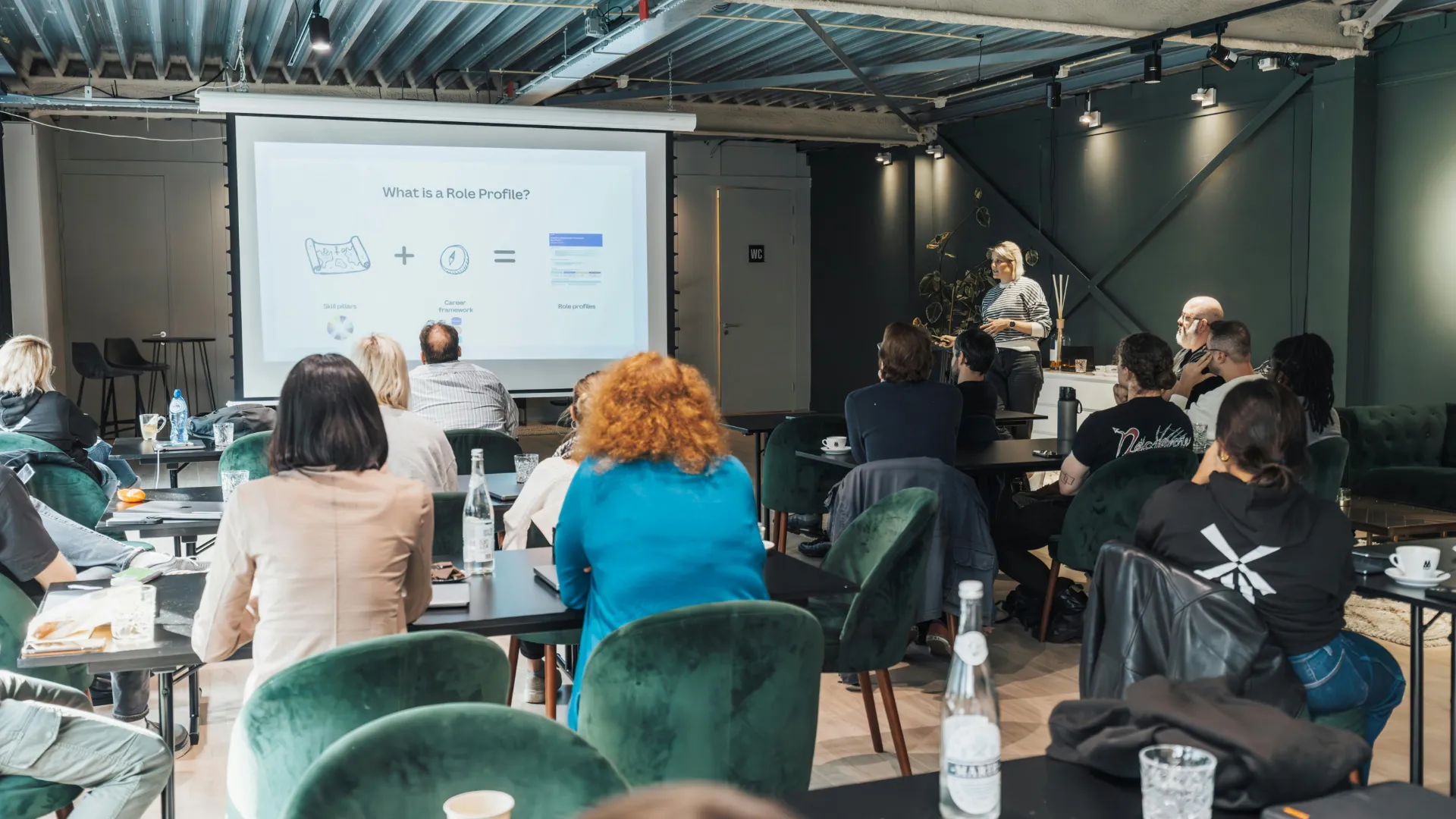
Content Formats That Improve Engagement
Long presentation blocks are one of the most consistent sources of audience disengagement at conferences. A single speaker presenting for forty-five minutes without interaction creates a passive audience by design.
Different content formats create different engagement levels:
Keynote Presentation
Moderate
Best for setting direction, introducing key themes, and communicating strategic messages.
Panel Discussion
High
Best for exploring multiple perspectives and encouraging audience engagement.
Fireside Chat
High
Ideal for conversational insights and less formal executive discussions.
Interactive Workshop
Very High
Designed for practical learning, collaboration, and hands-on participation.
Audience-Led Discussion
Very High
Encourages peer learning, open dialogue, and shared experiences among participants.
Ask-Me-Anything Session
High
Creates direct interaction between speakers and attendees through live questions.
Case Study Presentation
Moderate–High
Shares practical examples and real-world applications that audiences can learn from.
Varying content formats throughout the day maintains attention by changing the type of engagement required. A morning keynote followed by a panel discussion followed by a workshop creates a different rhythm than three consecutive keynote presentations.
Technology That Supports Conference Engagement
Technology supports engagement when it reduces friction for participation. It does not create engagement by itself.
Event Apps provide a single platform for the agenda, speaker information, networking, polling, and Q&A. They also allow attendees to connect with each other before the event begins.
Live Polling Platforms such as Slido, Mentimeter, or built-in event app features allow speakers to gather real-time audience input and display results immediately.
Audience Response Systems enable structured voting and feedback during sessions, giving speakers immediate visibility into audience understanding or opinion.
Digital Q&A Platforms allow attendees to submit questions throughout a session rather than waiting for a designated Q&A period, and allow the audience to upvote the most relevant questions.
The risk with technology is over-complication. If attendees spend time troubleshooting an app rather than engaging with the content, the technology has created friction rather than reducing it.
Technology choices should be tested and familiar before the event day.
For more on how AV production supports engagement technology, see our guide on what AV production includes for events.
Engagement Ideas for Hybrid Conferences
Hybrid conferences create two audiences, and both experiences must be designed intentionally. Remote attendees who receive a passive broadcast experience while in-person attendees participate in interactive sessions will disengage quickly.
Engagement strategies for hybrid conferences include:
Remote Participation in Live Polling, polling platforms that allow remote attendees to participate alongside in-room audiences in real time.
Hybrid Q&A, Q&A systems that collect questions from both in-room and remote attendees, with moderation that treats both equally.
Virtual Networking, dedicated networking sessions or platform features that allow remote attendees to connect with each other and with in-person attendees.
Livestream Interaction, chat functions, reaction features, and real-time engagement tools that give remote audiences a way to participate visibly.
Audience Parity, designing the programme so that remote attendees receive an experience comparable in quality and involvement to in-person attendees.
The most common mistake in hybrid conference engagement is treating the remote audience as a secondary consideration. When remote participation is designed into the programme from the start, engagement levels for both audiences improve significantly.
For more on hybrid event planning, see our hybrid event management guide and hybrid town hall event guide.


Common Conference Engagement Mistakes
Presentation-Heavy Agendas
Passive audiences lose attention throughout the day, reducing information retention and overall event impact.
Insufficient Networking Time
Attendees miss one of their primary reasons for attending, limiting relationship building and knowledge exchange.
Passive Audience Design
Without opportunities to participate, audiences become observers rather than active contributors.
Poor Moderation
Panel discussions and Q&A sessions lose focus, energy, and audience engagement.
Weak Remote Experience
Hybrid attendees disengage when the experience feels like a one-way broadcast instead of an inclusive event.
No Audience Interaction
Speakers present to the room rather than engaging with it, reducing participation and discussion.
The most common mistake is building a conference agenda around speaker availability rather than attendee experience. When the programme is designed to accommodate what speakers want to present rather than what attendees need to experience, engagement suffers throughout.
Designing Conferences People Actually Remember
Conference engagement is not about keeping people busy. It is about keeping people involved.
The difference is significant. Busy programmes fill time.
Involved programmes create experiences that attendees carry with them after the event ends.
The conferences that achieve this balance share a common characteristic: they were designed with the attendee experience as the primary planning objective, not the speaker schedule or the content list.
ERS Asia supports corporate event management and event production for conferences, summits, leadership events, and hybrid gatherings. For more on how production supports the conference experience, see our event staging guide for corporate events.
Frequently Asked Questions
How do you make a conference more engaging?
Conference engagement improves when participation is built into the programme structure. Live polling, audience Q&A, panel discussions, interactive workshops, and structured networking all increase attendee involvement.
Varying content formats throughout the day also helps maintain attention by changing the type of engagement required at different points in the programme.
What are good conference engagement ideas?
Effective conference engagement ideas include live polling during presentations, structured networking sessions, fireside chat formats, interactive workshops, roundtable discussions, digital Q&A platforms, and audience-led discussion sessions. The most effective ideas are those that reduce the barrier to participation and make interaction feel natural rather than forced.
How do you increase audience participation at conferences?
Audience participation increases when attendees are given clear, low-friction ways to contribute. Digital Q&A platforms, live polling, and small-group discussion formats all reduce the social friction of participation.
Moderation quality also matters, a skilled moderator draws out contributions from attendees who might not otherwise speak.
Why is networking important at conferences?
Networking is consistently one of the primary reasons professionals attend conferences. Meaningful connections made at conferences can lead to business relationships, partnerships, and opportunities that outlast the event itself.
When networking is facilitated rather than left to chance, the quality and quantity of connections made improves significantly.
How do hybrid conferences improve engagement?
Hybrid conferences improve engagement for remote attendees when participation tools, polling, Q&A, virtual networking, are designed to work equally for both in-person and remote audiences. The key is treating remote attendees as a primary audience rather than a secondary broadcast audience, and designing interaction into the programme from the start.
What technology helps conference engagement?
Useful conference engagement technology includes event apps, live polling platforms, digital Q&A systems, audience response tools, and virtual networking features. Technology works best when it reduces friction for participation rather than adding complexity.
All technology should be tested thoroughly before the event to ensure it works reliably during the live programme.
Table of Contents
Related Articles