
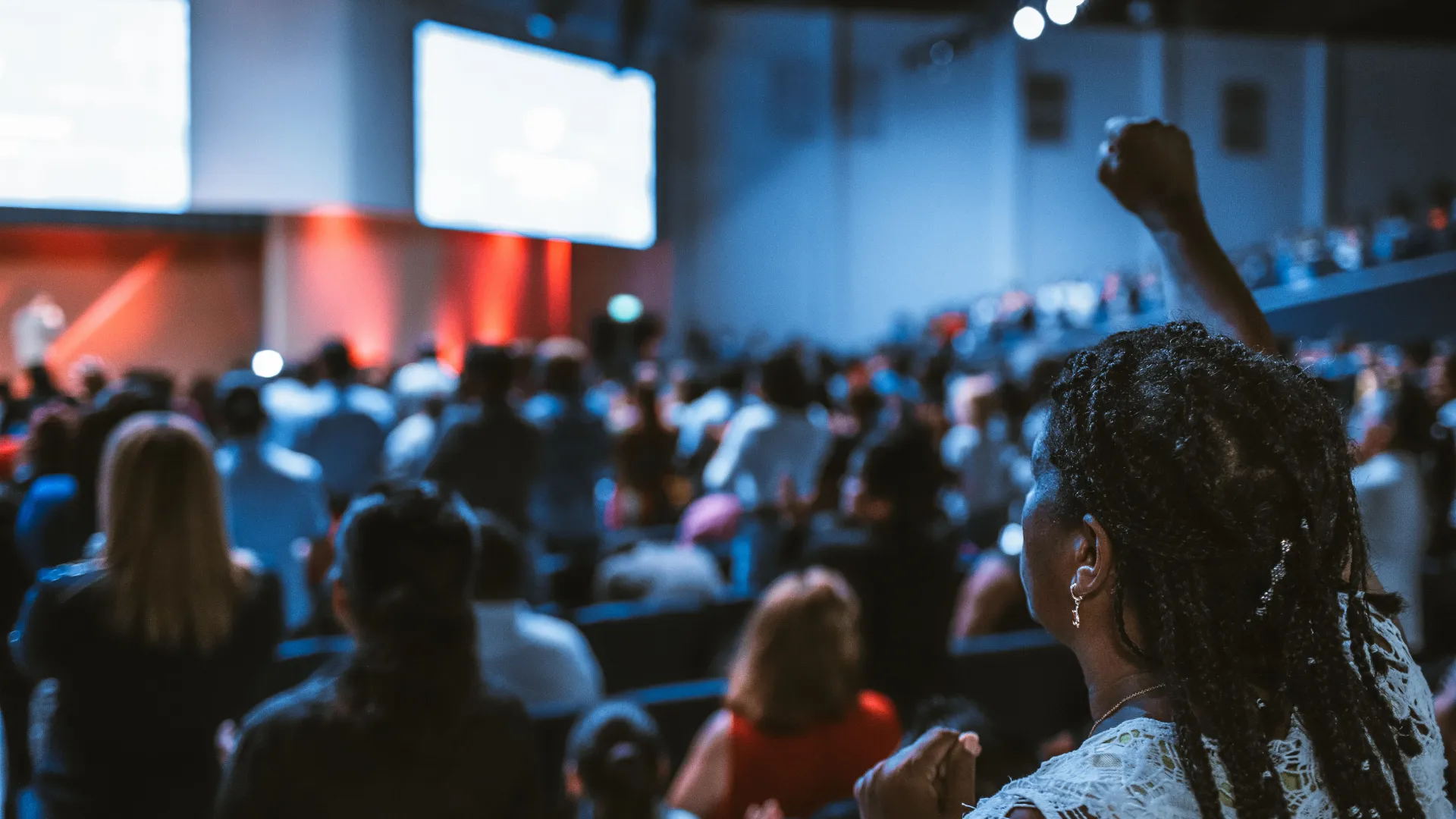
What Is a Town Hall Event? A Guide for Corporate Communication
- Published: June 17, 2026
Quick Answer
A town hall event is a company-wide meeting where leadership communicates updates, strategy, or important announcements to employees. Town halls may be held in person, virtually, or in hybrid formats, usually combining presentations, Q&A, and audience engagement. How well the message lands depends heavily on format and production: audio clarity, the remote experience, and the level of genuine interaction.
A town hall is one of the few moments where an entire organisation hears the same message at the same time.
Used well, it builds alignment, reinforces culture, and gives employees direct access to leadership. Used poorly, it becomes a one-way broadcast that people half-listen to with their cameras off.
The difference rarely comes down to the content. It comes down to format, production, and how much the event is designed for the audience rather than the speakers.
This guide explains what a town hall event is, why companies hold them, what happens during one, and what separates a town hall that connects from one that’s quietly ignored.
Why Companies Organise Town Hall Events
A town hall is a communication event, not just a meeting.
The strongest town halls are built around a clear communication objective. That objective shapes who presents, how long the event runs, and how much interaction is built in.
Leadership Updates
Gives employees direct access to senior leaders and organisational updates.
Business Strategy
Aligns teams around business direction, priorities, and future goals.
Company Announcements
Delivers significant news clearly, consistently, and at scale.
Employee Engagement
Creates space for questions, feedback, and meaningful dialogue.
Culture Building
Reinforces company values, celebrates achievements, and recognises contributions.
Change Management
Explains transitions, provides clarity, and reduces uncertainty during periods of change.
When a town hall tries to do all of these at once, the message dilutes. The most effective sessions lead with one priority and let the rest support it.
What Happens During a Town Hall Event
A well-run town hall has a clear structure that delivers the message and leaves room for genuine interaction.
01
Registration or Login
In-person guests arrive and settle while remote attendees join the stream. A smooth start sets the tone, while technical friction at login costs attention before anything is said.
02
Opening Remarks
A host or senior leader frames the session, explains what will be covered, and clarifies why it matters now.
03
Leadership Presentation
The core update covering strategy, results, announcements, or future direction. Strong visuals and clear audio carry this segment; dense slides and weak sound lose the room quickly.
04
Q&A Session
This is where a town hall earns its name. Questions from the floor and remote attendees turn the session from a broadcast into a conversation.
05
Employee Recognition
A short segment to acknowledge teams or individuals reinforces culture and helps break up information-heavy communication.
06
Closing Message
A clear close restates the key takeaway and outlines what happens next, rather than allowing the session to simply trail off.
Interaction matters as much as information. The town halls people remember are the ones where they felt heard, not just informed.
Town Hall vs Conference vs All-Hands Meeting
These formats are often used interchangeably, but they serve different objectives.
A town hall is built for leadership communication and dialogue. A conference is built for knowledge sharing across a fuller agenda.
An all-hands is the regular internal rhythm of company-wide updates.
Town Hall
Primary Purpose
Leadership communication
Format
Interactive Q&A
Audience
Employee audience
Frequency
Often recurring
Conference
Primary Purpose
Knowledge sharing
Format
Multi-session agenda
Audience
Mixed audiences
Frequency
Event-based
All-Hands
Primary Purpose
Company-wide updates
Format
Internal alignment
Audience
Employees only
Frequency
Regular cadence
The labels matter less than the intent. Choosing the right format, and resourcing it accordingly, is what determines whether the message lands.

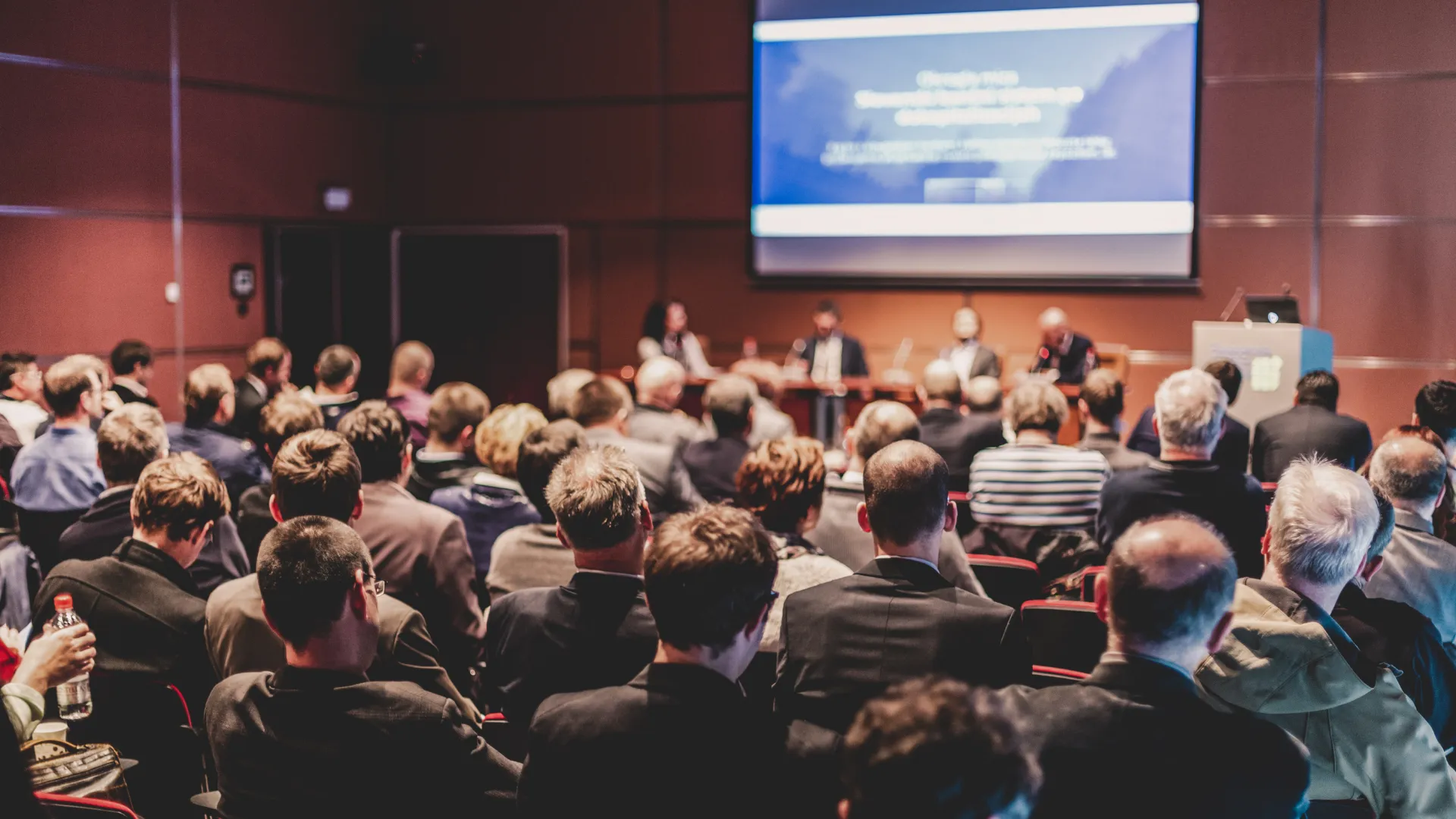
Hybrid Town Halls Require More Than a Livestream
This is where most town halls fall short.
The moment a town hall goes hybrid, it creates two audiences, in the room and on screen, and both need a strong experience. Pointing a single camera at the stage gives remote employees a weak, passive version of the event, and engagement drops accordingly.
What a strong hybrid town hall requires:
- Broadcast-quality audio routed for both in-room and remote audiences
- Multi-camera framing so remote viewers see speakers clearly, not from the back of the room
- Live polling and audience apps that let remote employees participate, not just watch
- Q&A moderation that surfaces remote questions alongside those in the room
- Stream stability and a moderator managing the online experience in real time
For organisations communicating across Singapore and the wider region, the remote audience is often the majority, which makes the broadcast layer the main event, not an add-on. The in-room production and the broadcast production require different thinking, and event production in Singapore for hybrid town halls is consistently underestimated until something fails publicly.
Common Town Hall Event Mistakes
These issues appear consistently, regardless of company size or budget.
One-Way Communication
Becomes a broadcast rather than a dialogue, causing employees to disengage.
Weak Audio Quality
Messages lose impact if employees cannot clearly hear speakers or discussions.
Poor Remote Experience
Hybrid attendees receive a noticeably weaker experience, creating inequity between audiences.
No Audience Interaction
Removes the dialogue and feedback that define an effective town hall.
Overly Long Presentations
Attention fades before key messages and strategic priorities are delivered.
Insufficient Rehearsals
Live technical errors become visible during the most important moments.
The common thread: treating a town hall as a presentation to deliver, rather than a conversation to facilitate.
Creating More Effective Leadership Communication
The best town halls don’t feel like meetings. They feel like the organisation is in the room together, including the people joining from elsewhere.
That comes from clear objectives, a format built for interaction, and production that gives every attendee a strong experience. When audio is clean, remote employees can participate, and leadership is genuinely accessible, a town hall does what it’s meant to: build alignment and trust.
ERS Asia supports corporate event management in Singapore across town halls, hybrid events, conferences, and regional leadership communications. See our work for examples of how we approach production and engagement across event types.

Frequently Asked Questions
What is a town hall event?
A town hall event is a company-wide meeting where leadership communicates updates, strategy, or announcements to employees. It usually combines presentations with Q&A and audience engagement, and can be held in person, virtually, or in a hybrid format.
Why do companies organise town hall meetings?
To communicate directly with employees at scale, sharing leadership updates, business strategy, or significant announcements, and building alignment and culture through open dialogue and Q&A.
What is the difference between a town hall and an all-hands meeting?
The terms overlap heavily. A town hall emphasises leadership communication and interactive Q&A, while an all-hands typically refers to the regular cadence of company-wide updates.
Many organisations use the two interchangeably.
Are town hall events usually hybrid?
Increasingly, yes. Most large organisations now run town halls with both in-person and remote audiences.
A hybrid town hall needs a dedicated broadcast layer, camera switching, audio routing, and remote engagement tools, not just a livestream.
What makes a successful town hall event?
A clear communication objective, a format built for interaction rather than one-way broadcast, strong audio and production, and a remote experience that lets every attendee participate. Rehearsal is what keeps the most visible moments running smoothly.
Table of Contents
Related Articles