

Town Hall Event Ideas for Employee Engagement
- Published: June 18, 2026
Quick Answer
Town hall events become more engaging when employees can participate rather than simply listen. Ideas such as live polling, anonymous Q&A, employee recognition, breakout discussions, and hybrid interaction tools create stronger engagement and improve leadership communication, especially when remote and in-room audiences are given an equal experience.
Engagement is what turns a town hall from an announcement into alignment.
When employees can participate, ask questions, vote, react, be recognised, they pay attention and they take ownership of the message. When the format is one-way, attention drops, cameras switch off, and the update lands flat.
The challenge has grown with hybrid working. A town hall now has two audiences, in the room and on screen, and both need a reason to lean in, not just watch.
This article covers practical town hall ideas that improve employee engagement and strengthen leadership communication, without turning the event into a team-building exercise.
Start With the Engagement Objective
Engagement isn’t a single thing, it depends on what you’re trying to achieve.
Before choosing activities, define what the town hall is meant to do. Different objectives call for different engagement formats, and matching the two is what makes participation feel purposeful rather than gimmicky.
Leadership Communication
Live Q&A
Direct Access to Senior Leaders
Employee Recognition
Spotlights
Milestones
Peer Appreciation
Culture Building
Storytelling
Values Moments
Shared Celebration
Change Management
Anonymous Questions
Two-Way Dialogue
Knowledge Sharing
Polls
Quizzes
Interactive Segments
Two-Way Dialogue
Open Mic
Audience-Led Discussion
When engagement activities are chosen to fit the objective, they reinforce the message. When they’re added for novelty, they distract from it.
Town Hall Ideas That Encourage Participation
Participation creates ownership.
The most effective engagement ideas are simple, low-friction, and give every employee a way to contribute, not just the confident few who speak up in a room.
Live polling
Quick, visual, and inclusive. A poll mid-presentation pulls the whole audience back in and gives leadership a real-time read on the room.
Anonymous Q&A
Removes the fear of asking the hard question. Anonymous submission consistently surfaces the questions employees actually care about.
Real-time surveys
Gauge sentiment on a topic as it’s discussed, and show the results live to close the loop.
Interactive quizzes
A light way to reinforce key messages or company knowledge without lecturing.
Audience voting
Let employees prioritise topics, choose discussion themes, or weigh in on decisions where appropriate.
Open microphone sessions
For the right culture, unscripted questions from the floor signal genuine openness from leadership.
These ideas work best when they’re built into the agenda from the start, not bolted on. For more on structuring the session around interaction, see how to plan a town hall meeting.
Employee Recognition Ideas
Recognition is one of the strongest engagement tools a town hall has.
Acknowledging people in front of their peers reinforces culture and gives the session an emotional high point. It also breaks up information-heavy segments and reminds employees that the company sees their contribution.
Employee spotlights
Short features on individuals or teams who’ve made an impact.
Milestone celebrations
Long-service anniversaries, project completions, or business achievements worth marking together.
Peer recognition
Letting employees nominate and acknowledge each other, rather than recognition only flowing top-down.
Awards moments
A structured recognition segment, presented well, becomes a memorable centrepiece. For events where recognition is the main focus, an award ceremony or a gala dinner may be the better format.
Leadership appreciation
Senior leaders publicly thanking teams adds weight that a written note never carries.
Done well, recognition is the segment employees remember long after the business updates have faded.
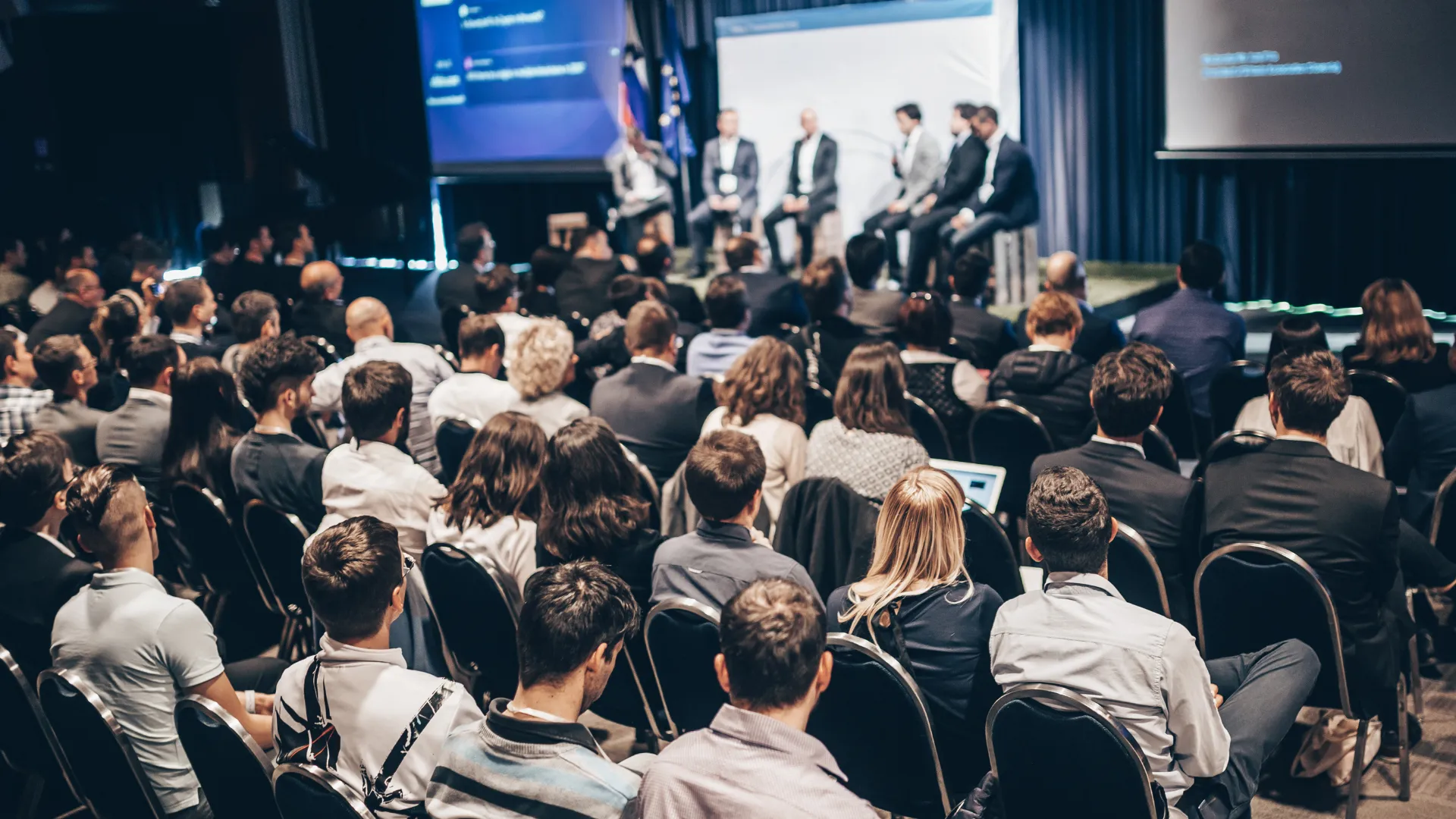

Hybrid Engagement Ideas
This is where most town halls fall short, and where the biggest opportunity sits.
A hybrid town hall creates two audiences that both need engagement. Remote employees can’t be left watching a passive stream while the room enjoys the real event.
The goal is parity: everyone gets a way to participate, wherever they are.
Audience apps
A single app for polls, Q&A, and reactions puts in-room and remote employees on the same footing.
Livestream chat
A moderated chat gives remote attendees a live voice during the session.
Remote Q&A
Surfacing online questions alongside those from the floor signals that remote employees are equal participants, not an audience watching from afar.
Digital networking
Virtual breakout rooms or networking spaces give distributed teams a way to connect around the event.
Hybrid polling
Combining in-room and remote responses into one live result makes the whole organisation feel present together.
Multi-location participation
For organisations spread across Singapore and the region, enabling each site to contribute keeps the event genuinely company-wide.
The technology only works when it’s produced properly. Event production in Singapore for hybrid town halls covers the broadcast quality, audio routing, and moderation that make remote engagement reliable rather than frustrating, which is the core of strong town hall event management.
Common Engagement Mistakes
These issues consistently undermine town hall engagement, regardless of company size.
Presentations That Run Too Long
Attention fades before meaningful interaction and participation can begin.
No Audience Interaction
The event becomes a broadcast rather than a conversation, causing employees to disengage.
Weak Remote Experience
Hybrid attendees feel like an afterthought and participate less actively.
Unclear Objectives
Activities feel random, disconnected, and gimmicky rather than purposeful.
No Moderation
Questions, chat discussions, and audience participation lose focus or go unanswered.
Lack of Rehearsal
Interactive tools and engagement activities fail during the most visible moments.
The common thread: engagement is treated as an add-on, when it should be designed into the event from the start.
Creating More Engaging Town Hall Experiences
The town halls employees remember are the ones where they felt part of the conversation, not just on the receiving end of it.
That comes from a clear objective, interaction built into the agenda, recognition that reinforces culture, and a hybrid experience that treats remote employees as equals. When those elements come together, a town hall does what it’s meant to: build alignment, trust, and engagement across the whole organisation.
ERS Asia supports corporate event management in Singapore across town halls, hybrid events, conferences, and regional leadership communications. See our work for examples of how we approach engagement and production across event types.


Frequently Asked Questions
How do you make a town hall meeting more engaging?
Build interaction into the agenda from the start, live polling, anonymous Q&A, recognition moments, and audience participation tools. Engagement works best when it fits a clear objective, and when remote employees are given the same opportunity to participate as those in the room.
What activities improve employee engagement during town halls?
Live polling, real-time surveys, anonymous Q&A, interactive quizzes, audience voting, employee recognition, and open mic sessions all encourage participation. The strongest choice depends on the town hall’s objective and your company culture.
What are good hybrid town hall ideas?
Audience apps, moderated livestream chat, remote Q&A surfaced alongside in-room questions, hybrid polling that combines all responses, and multi-location participation. The aim is parity, remote employees should be able to engage as fully as those in the room.
Why is employee participation important in town halls?
Participation creates ownership. When employees can ask questions, vote, and be recognised, they pay closer attention and engage more deeply with the message.
One-way communication consistently loses attention and weakens alignment.
How long should a town hall meeting last?
Around 60–75 minutes works for most corporate town halls, long enough to communicate and interact properly, short enough to hold attention. Sessions with more interaction need careful pacing to stay engaging throughout.
Table of Contents
Related Articles