

Hybrid Town Hall Event Guide: Engaging In-Person and Remote Employees
- Published: June 19, 2026
Quick Answer
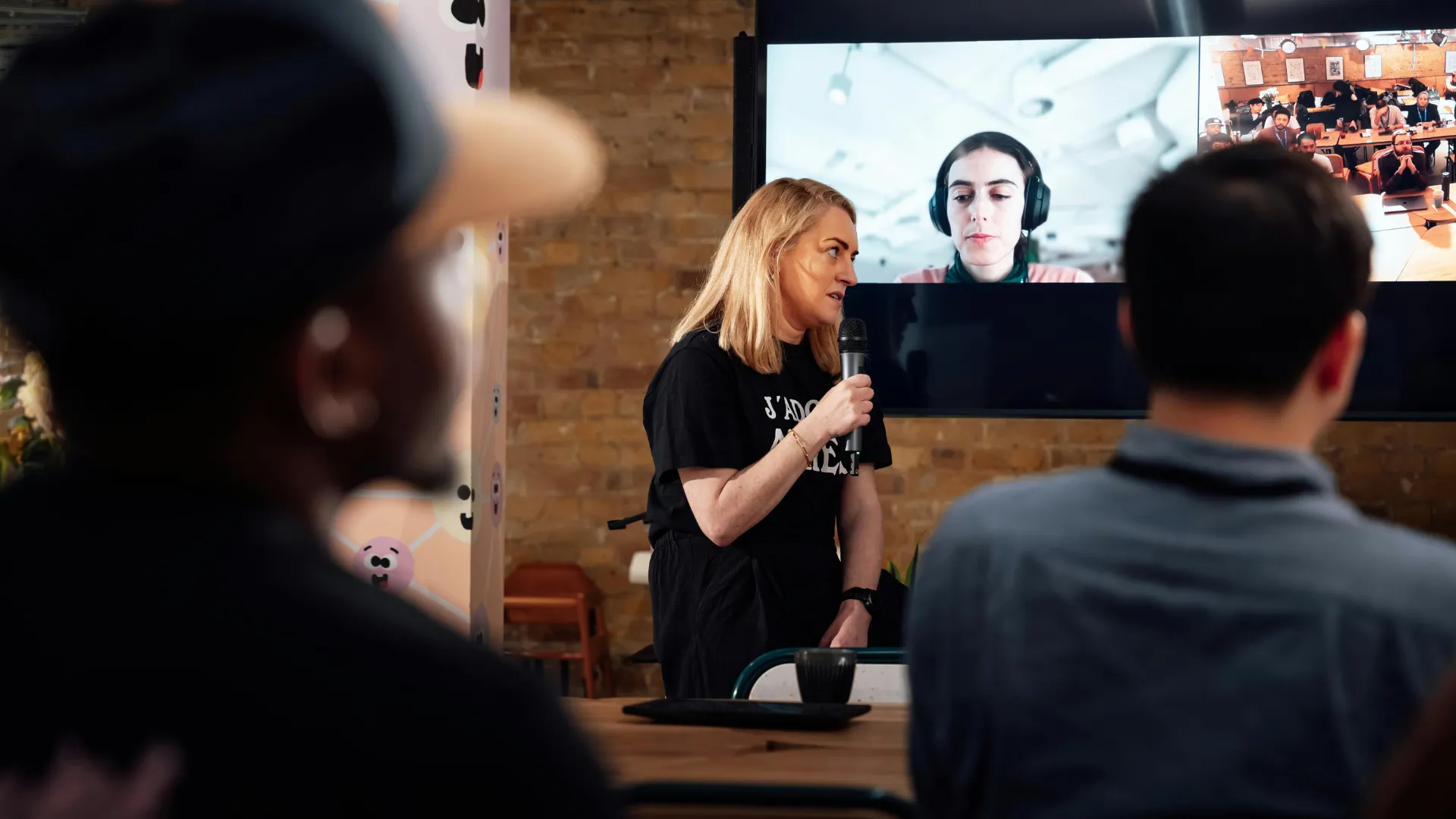
A hybrid town hall event combines an in-person audience with employees joining remotely. Successful hybrid town halls balance leadership communication, audience participation, and production quality so both groups can hear, see, and engage equally, the difference between one shared event and a room being broadcast to onlookers.
For most organisations, hybrid is now the default way to bring everyone together.
Teams are spread across offices, cities, and sometimes countries, and a town hall has to reach all of them at once. The format makes leadership communication possible at scale, but it also raises the bar, because a hybrid town hall is judged by the weakest experience in the room or on the screen.
The organisations that get this right stop thinking of it as a meeting with a livestream attached. They plan one event for two audiences, and they resource the remote experience as seriously as the in-room one.
This guide covers how hybrid town halls work, why they’re worth the effort, and what it takes to keep both audiences genuinely engaged.
What Is a Hybrid Town Hall Event?
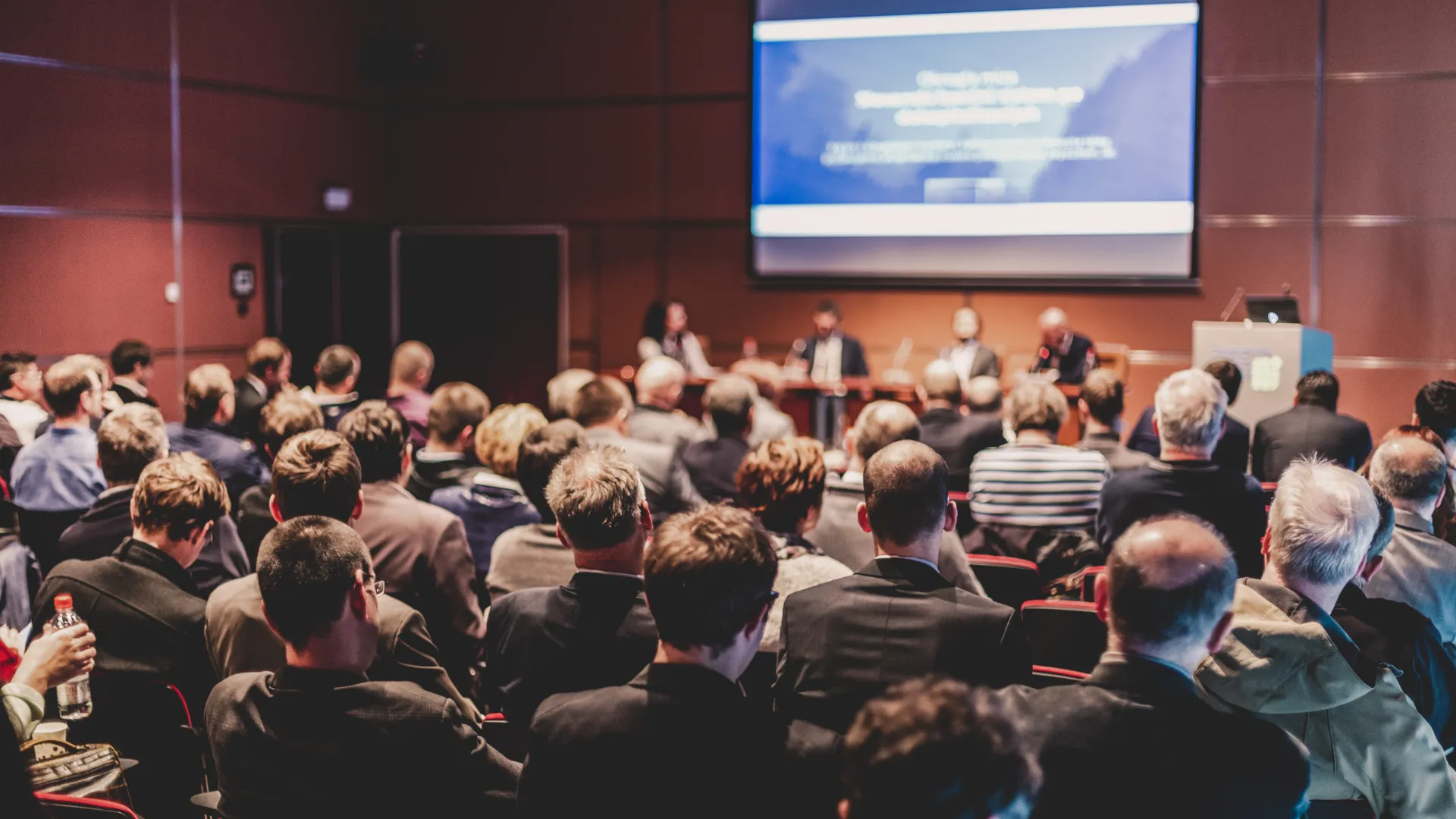
A hybrid town hall is a company-wide meeting attended both in person and remotely at the same time.
In-room employees and remote employees join the same live event, the same presentations, the same Q&A, the same recognition moments, across whatever locations the organisation spans.
What a hybrid town hall typically includes:
- An in-person audience at a primary venue
- A remote audience joining by livestream
- Leadership presentations and business updates
- Live Q&A open to both audiences
- Audience polling and interaction
- Multi-location participation across sites or regions
The defining feature is that it creates two audiences who must feel equally included. For a broader look at the format and its purpose, see what a town hall event is.
Why Organisations Use Hybrid Town Halls
The hybrid format solves a problem that purely in-person events can’t.
It lets leadership communicate with the whole organisation at once, regardless of where people sit, which matters more every year as workforces spread out.
Regional Teams
Connects employees across multiple cities, offices, and countries through a single shared experience.
Distributed Workforces
Includes remote employees, field teams, and hybrid workers who cannot attend in person.
Leadership Visibility
Gives every employee direct access to senior leaders regardless of physical location.
Employee Engagement
Maintains connection, participation, and organisational alignment across dispersed teams.
Business Updates
Delivers one consistent message to everyone at the same time, reducing communication gaps.
Cost Efficiency
Avoids the expense and disruption of flying entire teams to a single physical location.
Used well, the hybrid format helps organisations communicate at scale without leaving anyone on the outside of the conversation.
The Biggest Challenge: Creating One Shared Experience
This is where hybrid town halls succeed or fail.
The instinct is to point a camera at the stage and stream it. But broadcasting a room is not the same as running an event, and remote employees feel the difference immediately.
They become spectators watching other people have the experience, and their attention goes with it.
The goal is audience parity: one event where both groups can hear, see, contribute, and be acknowledged equally. That requires deliberate choices:
Remote inclusion
Remote employees should be addressed directly, not treated as an audience watching from afar. Small things, a presenter looking into the camera, naming remote sites, signal that they’re part of the room.
Equal participation
Polls, Q&A, and reactions need to work the same way for everyone, so a remote employee’s question carries the same weight as one from the floor.
Communication consistency
Both audiences receive the same message, timing, and visuals, with no lag or quality gap that makes one experience clearly lesser.
The moderator’s role
A dedicated moderator manages the remote audience in real time: surfacing online questions, watching the chat, and making sure the remote group is brought into the conversation rather than forgotten.
The shift in mindset is simple but decisive. The aim is not to broadcast a room.
The aim is to create one event experience that happens to be in two places at once.


Hybrid Engagement Ideas That Work
Engagement is what keeps remote employees present rather than passive.
The most effective ideas give every attendee a low-friction way to take part, and combine both audiences into a single shared response wherever possible.
Live polling
Quick, visual, and inclusive; combined in-room and remote results make the whole organisation feel present together.
Anonymous Q&A
Surfaces the questions employees actually want answered, with remote submissions treated equally to those from the floor.
Audience apps
A single app for polls, questions, and reactions puts both audiences on the same footing.
Hybrid voting
Decisions or topic prioritisation that pool responses from every location.
Multi-site discussions
Letting each office or region contribute keeps a dispersed event genuinely company-wide.
Employee recognition
Spotlights and milestones that include remote recipients, not just those who happen to be in the room.
For a deeper set of options, see town hall ideas for employee engagement, and for structuring the session overall, how to plan a town hall meeting.
Production & Technology Requirements
Technology supports communication. Production is what makes engagement reliable.
A hybrid town hall depends on a broadcast layer that most teams underestimate until something fails publicly. These are the elements that determine whether the remote experience holds up.
Livestream production
A stable, broadcast-quality stream rather than a single webcam feed, with encoding built for the platform and audience size.
Camera coverage
Multiple cameras and live switching so remote viewers see speakers clearly and the event has visual rhythm, not one fixed wide shot.
Audio quality
The single most important element. If either audience can’t hear cleanly, nothing else matters.
Presentation screens
Visuals routed clearly to both the room and the stream, so slides and video read well on every device.
Moderation
A dedicated person managing chat, remote Q&A, and the online experience throughout.
Internet redundancy
Backup connectivity so a single network drop doesn’t take the remote audience offline at the worst moment.
Technical rehearsals
A full run with the complete setup; most live failures are preventable and surface in rehearsal.
This is the layer where experience shows. Event production in Singapore for hybrid town halls and broader hybrid event management is built around exactly these requirements, because they’re where hybrid events most often come undone.
Common Hybrid Town Hall Mistakes
These issues appear consistently, regardless of company size or budget.
01
Treating Remote Attendees as Viewers
Removes participation parity and causes the remote audience to disengage from the event experience.
02
Weak Audio Quality
The message is lost before it is heard, reducing the impact of leadership communication.
03
No Remote Interaction
Remote employees become spectators rather than active participants in the conversation.
04
Insufficient Rehearsals
Preventable technical and production failures occur live in front of the entire audience.
05
Platform or Connectivity Failures
Remote attendees lose access to the event if backup systems and contingency plans are not in place.
06
Overloaded Presentations
Attention fades before interaction begins, reducing engagement across both audiences.
The common thread: the remote audience is planned as an afterthought, when it’s often the majority of the people attending.
Creating More Effective Hybrid Town Halls
A hybrid town hall works when no one can tell you it was designed for the room first.
That comes from planning one event for two audiences, building interaction in for everyone, and producing the broadcast layer with the same care as the stage. When audio is clean, remote employees can participate, and every location feels addressed, a hybrid town hall does what it’s meant to: keep a dispersed organisation aligned and connected.
ERS Asia supports corporate event management in Singapore across hybrid events, town halls, conferences, and regional leadership communications. See our work for examples of how we approach engagement and production across event types.
Frequently Asked Questions
What is a hybrid town hall event?
A hybrid town hall is a company-wide meeting attended both in person and remotely at the same time. Both audiences join the same live event, presentations, Q&A, and recognition, and the aim is for each group to hear, see, and participate equally.
How do hybrid town halls work?
An in-person audience gathers at a venue while remote employees join by livestream. Production combines multi-camera coverage, clean audio, and presentation visuals into one broadcast, while engagement tools, polling, Q&A, audience apps, let both groups participate together in real time.
What technology is needed for a hybrid town hall?
A broadcast-quality livestream setup, multiple cameras with live switching, professional audio, presentation screens routed to both audiences, a streaming platform, audience interaction tools, internet redundancy, and a moderator managing the remote experience.
How do you engage remote employees during a town hall?
Give them equal ways to participate, live polling, anonymous Q&A, audience apps, and recognition that includes remote staff. Address remote sites directly, surface online questions alongside in-room ones, and use a moderator to keep the remote audience in the conversation.
Why is production important for hybrid events?
Because production is what makes the remote experience reliable. Clean audio, stable streaming, clear visuals, and rehearsal are what allow both audiences to engage equally.
Without them, remote employees receive a noticeably weaker event and disengage.
Table of Contents
Related Articles