
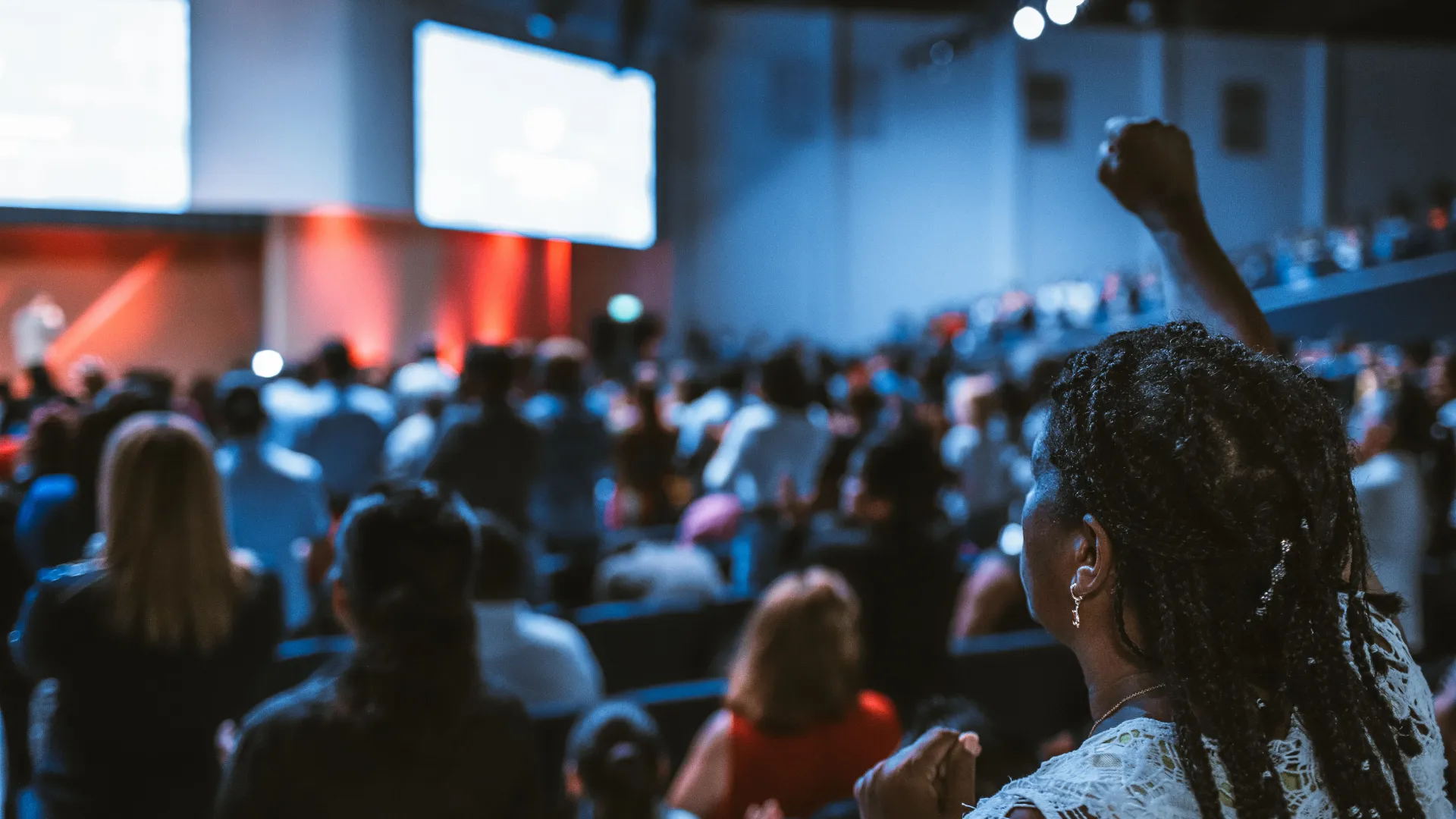
What Does Event Production Include?
- Published: June 12, 2026
Quick Answer
Event production includes staging and set design, AV systems, lighting, visual production, livestream and hybrid support, and on-site technical coordination. Together, these elements shape how an event looks, sounds, and flows, and directly affect how the audience experiences it live.
Event production is what turns a schedule into a live experience.
It’s not just lighting and sound. Production covers everything that shapes how an event feels, from the moment guests walk in to the final cue of the evening.
For corporate events, the quality of production directly affects how the audience receives the message. Poor audio breaks attention.
Weak staging undermines credibility. A missed cue disrupts flow.
This article covers the core elements of event production and why each one matters for the live experience.
Staging & Event Setup
The physical environment sets the tone before anyone speaks.
Stage design, seating configuration, and branding placement all influence how the audience perceives the event, and the organisation behind it.
What this covers:
- Stage dimensions and configurations (thrust, flat, elevated)
- Seating layouts (theatre, cabaret, classroom, roundtable)
- Audience sightlines and viewing angles
- Brand integration, backdrops, banners, LED signage
- Entrance design and audience flow
A well-designed stage creates authority. Poor sightlines or an under-branded environment signals poor preparation, even if the content is strong.
AV, Lighting & Visual Production
Audio and visual quality directly affect audience attention and retention. If attendees cannot hear clearly or see the presentation, engagement drops regardless of how well the content is prepared.
01
Audio
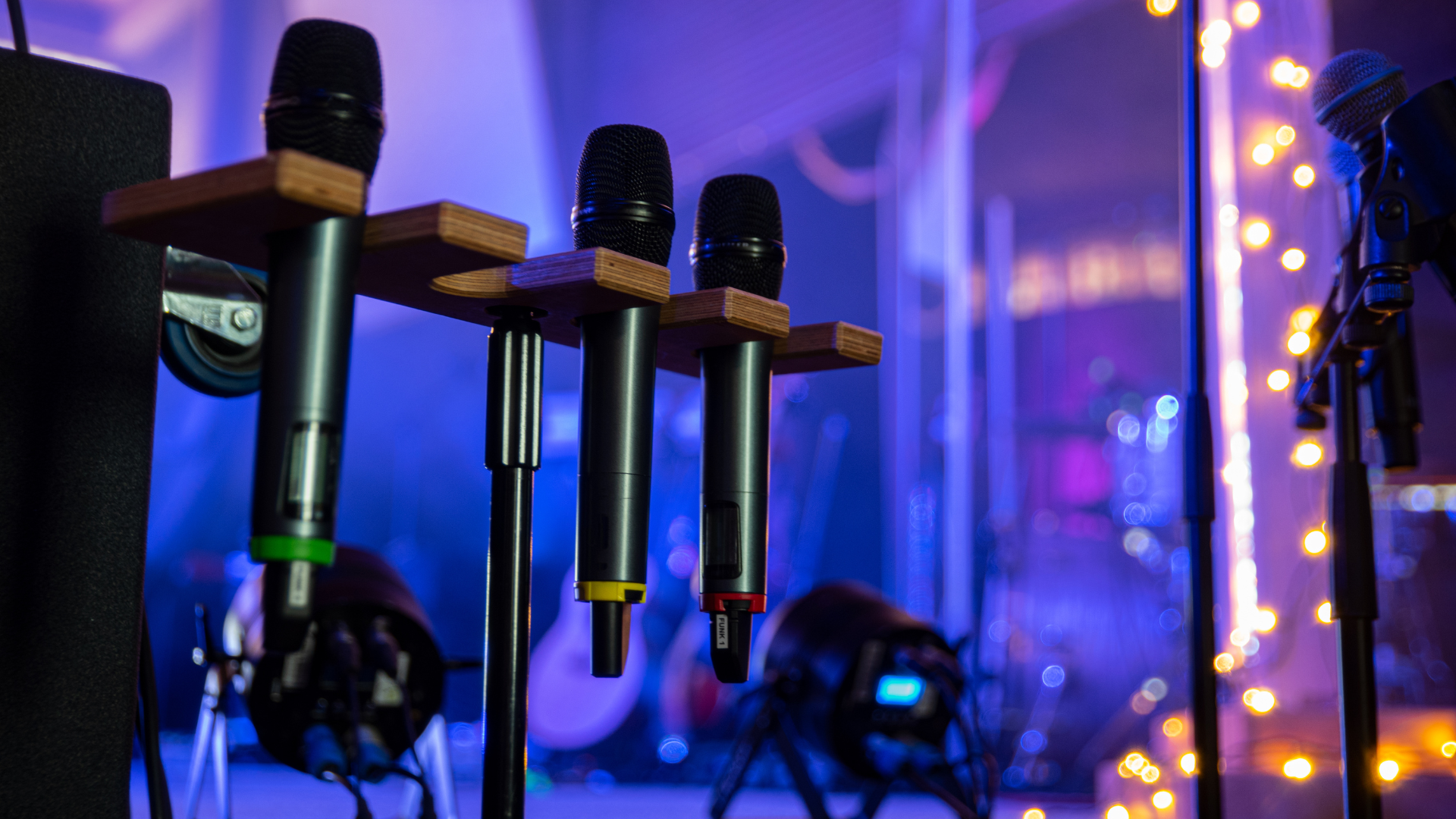
Main PA systems, wireless microphone management, stage monitors, and live mixing form the foundation of audience experience. A room with poor acoustics or inconsistent audio loses audience attention quickly.
02
Lighting
Stage lighting shapes how speakers and performers are perceived. Dynamic cue-based lighting maintains energy throughout the programme, while flat lighting reduces impact. This is particularly important for gala dinners, award ceremonies, and product launches.
03
Visual Production
LED walls, projection screens, motion graphics, lower thirds, and presentation playback create the visual layer of an event. These assets reinforce messaging, storytelling, and brand identity throughout the experience.
These three components work together as a single production ecosystem. A balanced audio, lighting, and visual strategy makes an event feel polished, professional, and memorable. When one element fails, the overall experience immediately feels incomplete.
Livestream & Hybrid Event Support
For corporate events today, production doesn’t stop at the room.
Hybrid and livestream audiences require a separate production layer, one that is frequently underestimated until something fails publicly.
What hybrid production includes:
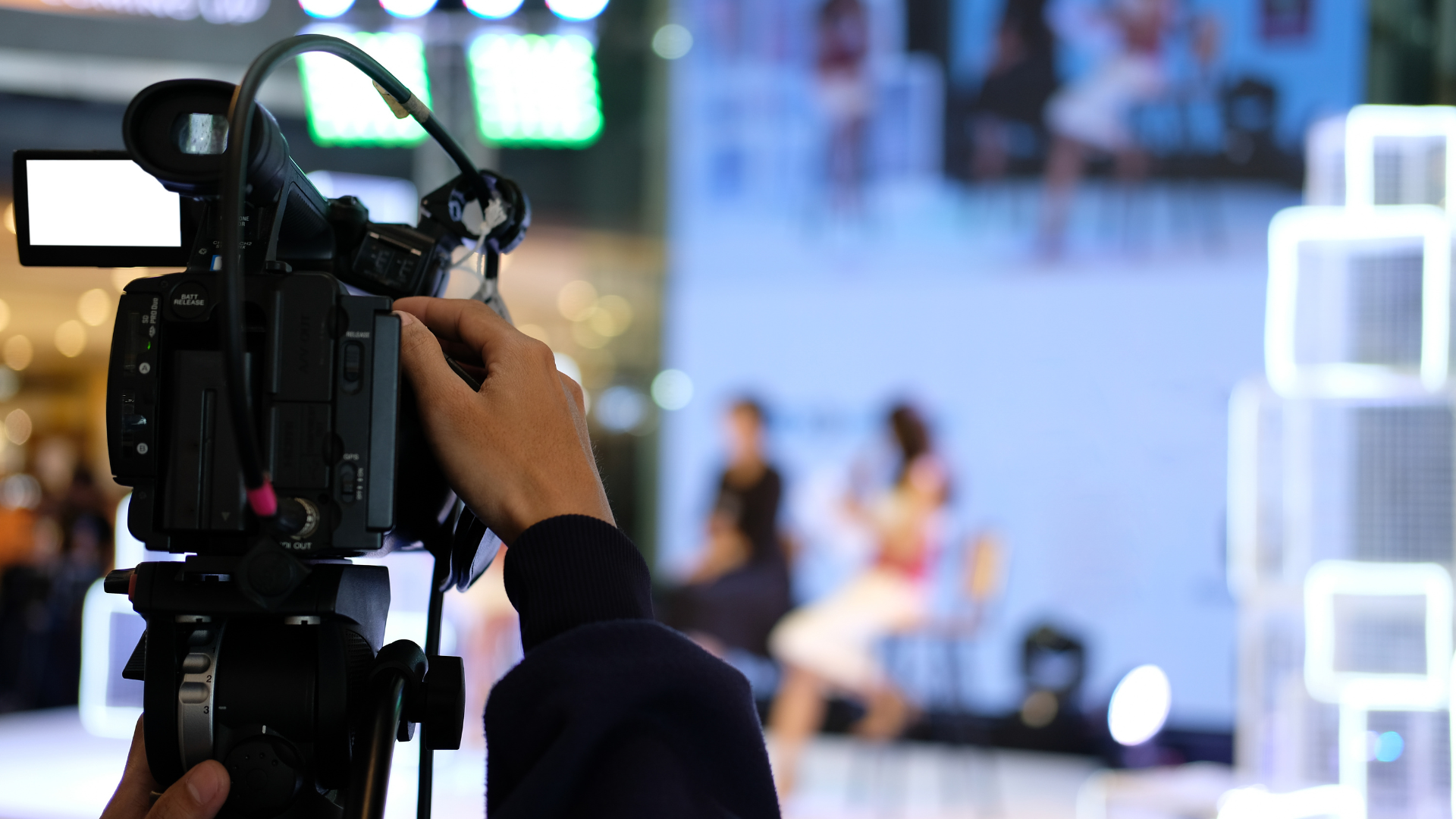
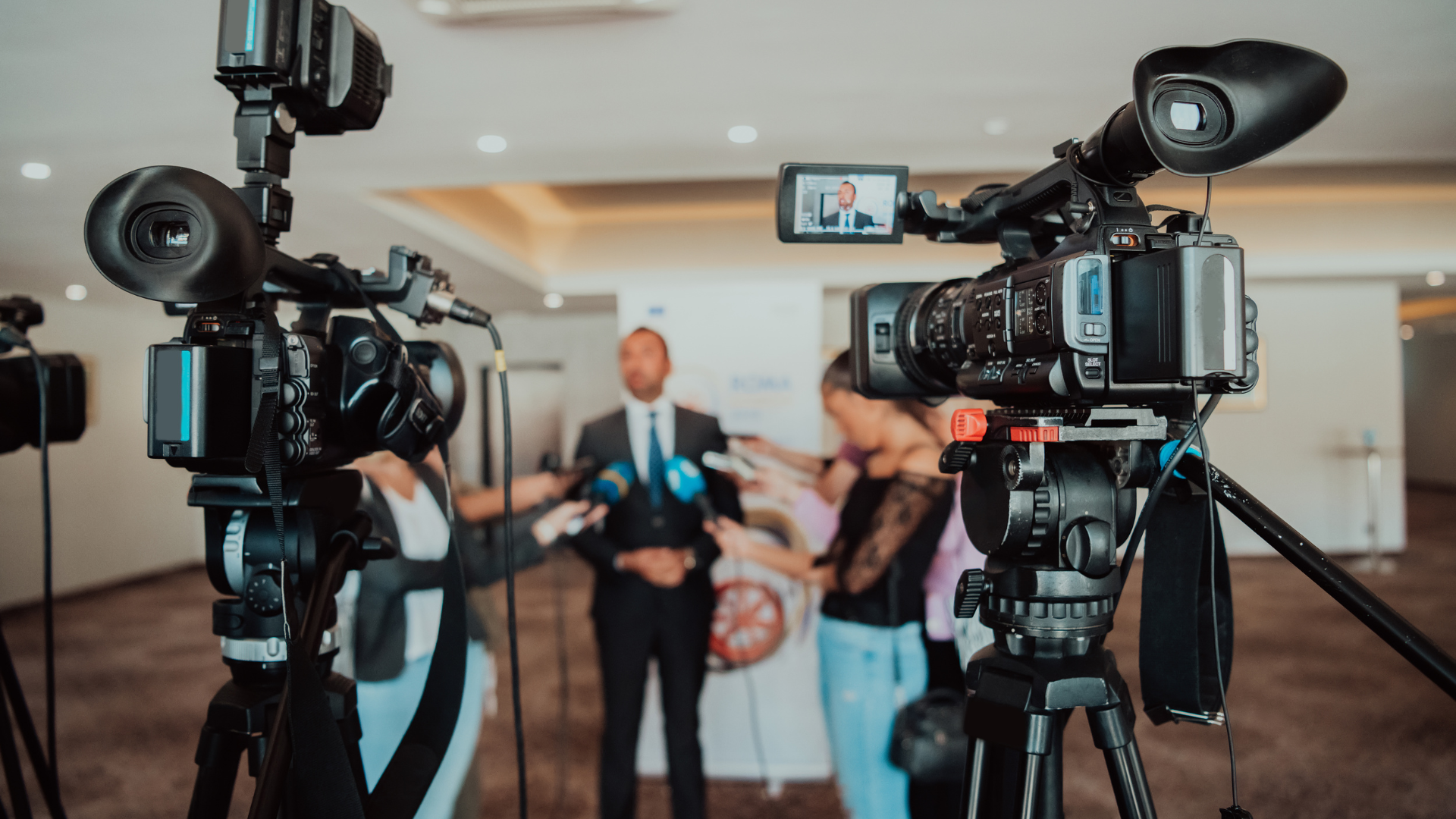
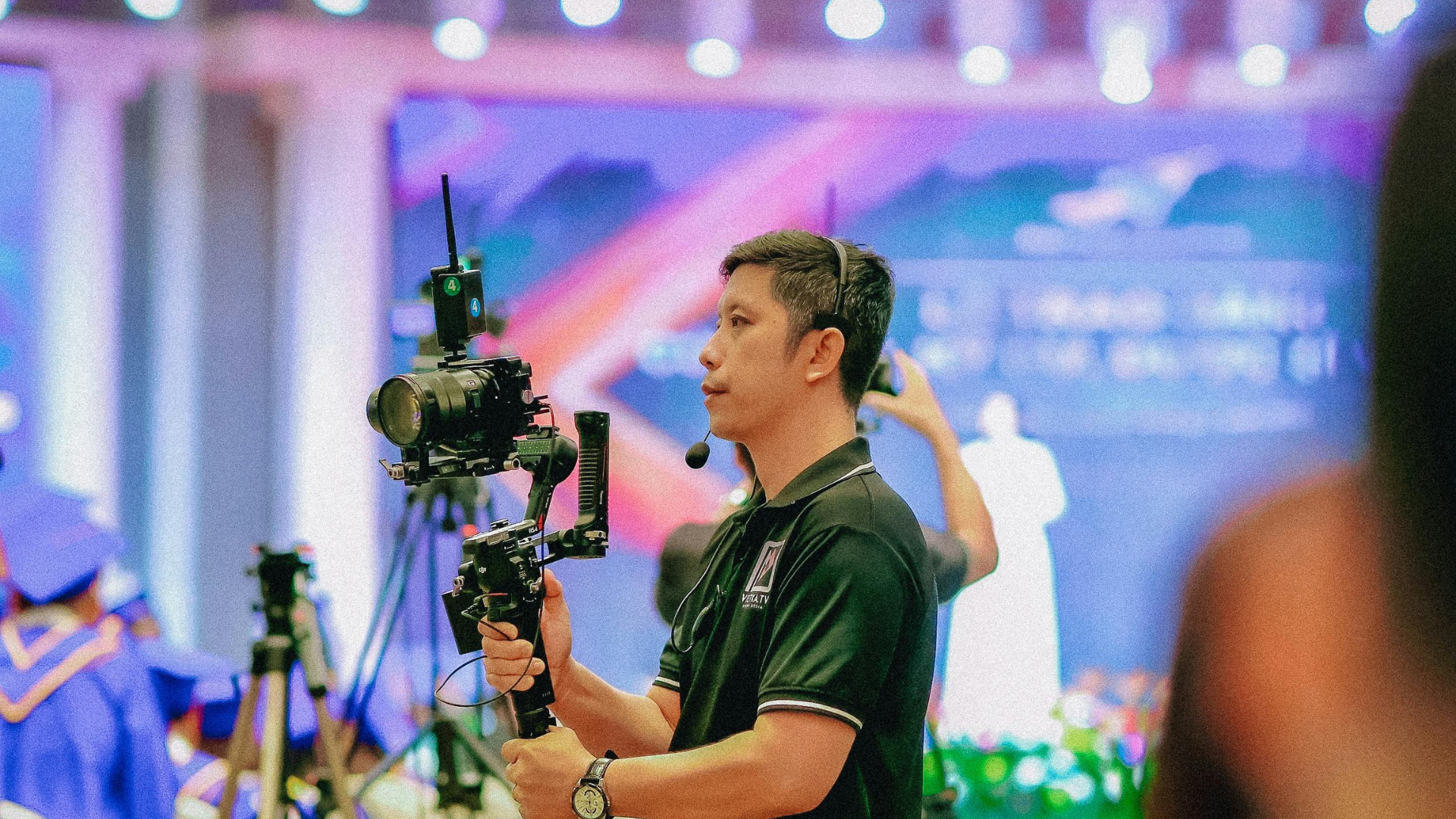
- Multi-camera setup and live switching
- Stream encoding and platform integration (Teams, Zoom, YouTube, custom portals)
- Broadcast-quality audio feeds for remote viewers
- Online audience management and moderation
- Recording and post-event content delivery
In-room production and broadcast production require different thinking. What reads well on stage doesn’t always translate to camera without deliberate framing, adjusted lighting, and careful audio routing.
Town halls and large hybrid conferences benefit most from a production team that understands both environments, not just the live room.
Technical Coordination & Event Flow
This is where experienced production teams earn their value.
Good production is invisible. Attendees don’t notice tight cue timing, seamless transitions, or a speaker arriving on stage at exactly the right moment, because it simply works.
What production coordination covers:
- Run-of-show documents and production schedules
- Technical rehearsals and dry runs
- Speaker management and pre-event briefings
- Live cue-calling and stage management
- Backstage coordination across crew and vendors
- Real-time troubleshooting and contingency response
Most production problems aren’t technical failures. They’re coordination failures, a speaker who wasn’t briefed, a cue that wasn’t confirmed, a video file that wasn’t tested in the room.
Experienced production teams resolve these before they become visible.
For conferences and leadership summits, this operational layer is as critical as the equipment itself.
Common Event Production Mistakes
These are the issues that make well-planned events feel rough.
Poor Audio Setup
Breaks audience attention within the first few minutes and immediately reduces message retention.
Weak Stage Lighting
Undermines speaker presence, visual impact, and overall brand perception.
Skipping Technical Rehearsals
Most live production failures originate from elements that were never properly tested.
Unclear Cue Timing
Creates visible pauses, awkward transitions, and a less professional audience experience.
Insufficient Audience Sightlines
Reduces engagement by limiting visibility of speakers, content, and stage activity.
Underestimating Hybrid Complexity
Results in a noticeably weaker experience for remote participants and lower digital engagement.
The common thread: these mistakes come from treating production as a rental checklist, rather than a live coordination function that requires planning and rehearsal.
Production Is What Makes the Experience
Strong event production is rarely noticed. Poor production always is.
Whether it’s a product launch, a company conference, a gala dinner, or an internal town hall, production is what holds the experience together and ensures the message lands.
ERS Asia manages end-to-end event production in Singapore, covering staging, AV, lighting, livestream, and full technical coordination. For teams running corporate events at scale, the production layer is the difference between an event that works on paper and one that works live.
See how ERS Asia approaches production across different event types.
Frequently Asked Questions
What is included in event production?
Event production covers staging, AV systems, lighting, visual production, livestream support, and on-site technical coordination, everything that shapes how an event looks, sounds, and flows.
Why is event production important?
Production directly affects how the audience receives the event. Poor audio, weak lighting, or missed cues disrupt engagement and undermine the event’s credibility.
What equipment is used in event production?
Common equipment includes PA systems, wireless microphones, LED walls, projection screens, stage lighting rigs, mixing consoles, cameras, and livestream encoders.
Do hybrid events require additional production support?
Yes. Hybrid events need a separate broadcast layer, camera switching, stream encoding, and audio routing for remote audiences, which is distinct from the in-room setup.
What is the difference between event planning and event production?
Event planning covers logistics, scheduling, and vendor management. Event production focuses on the technical and creative execution, what the audience sees, hears, and experiences live.
Table of Contents
Related Articles