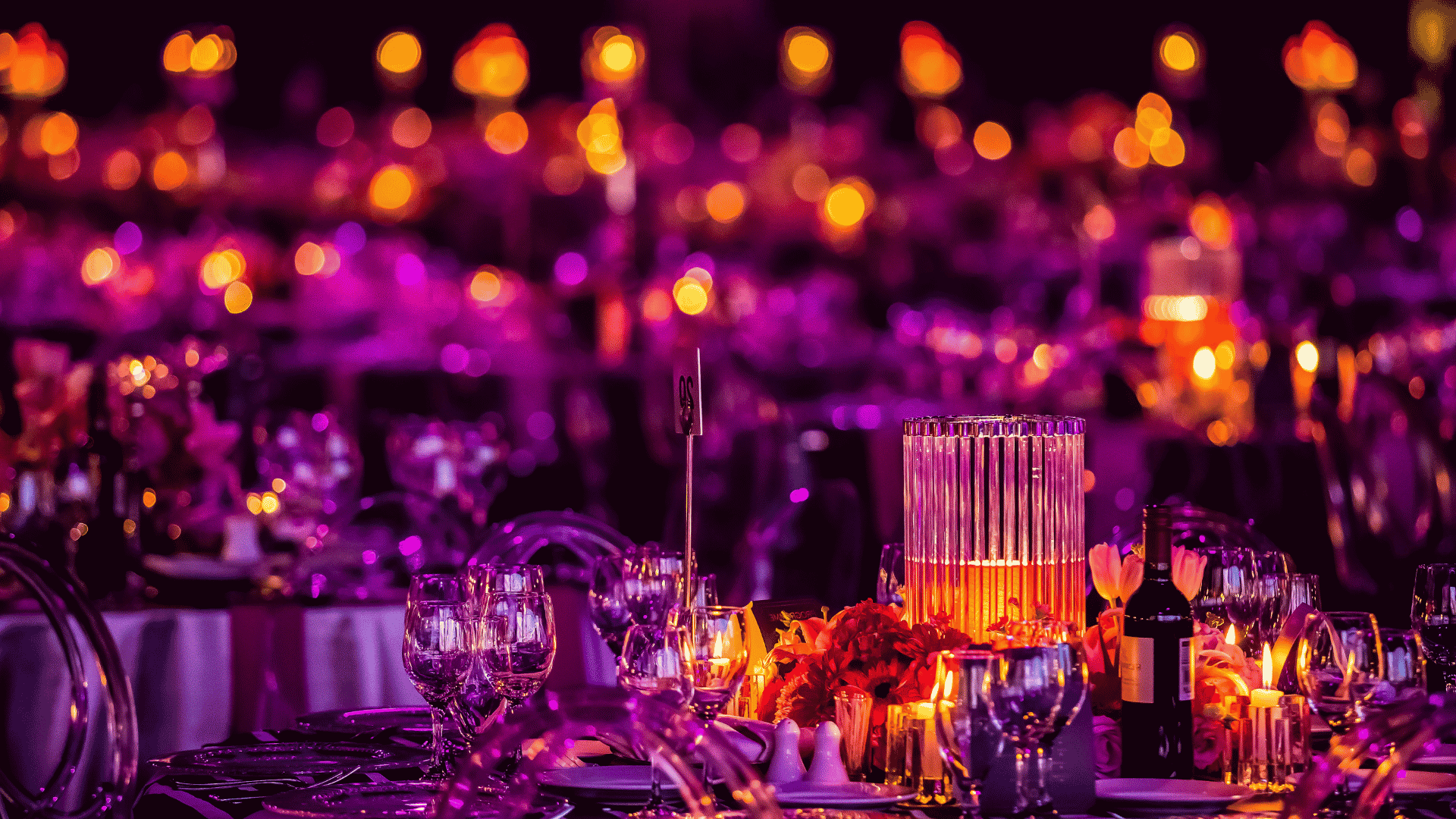
Gala Dinner Planning Checklist for Corporate Events
- Published: June 15, 2026
Quick Answer
A gala dinner planning checklist should cover event objectives, guest experience, event flow, venue logistics, production setup, and entertainment. For corporate events, production planning, staging, lighting, AV, and cue management, is often the most underestimated element and should begin as early as the venue search.
Gala dinners involve more moving parts than most corporate events.
Venue, catering, entertainment, production, seating, guest communications, run-of-show, all need to align for the evening to feel seamless. And the experience guests remember isn’t the food or the flowers.
It’s the atmosphere, the flow, and the moments that landed.
This checklist covers the planning stages that determine whether a gala dinner delivers, from initial objectives through to live execution.
Start With the Event Objective
Before any booking is made, define what the gala dinner is for.
The objective shapes every other decision: format, venue, production brief, entertainment selection, and how success gets measured. A gala designed to appreciate employees should feel very different from one designed to impress clients or host an awards night.
Objective Planning Checklist
- Define the primary event purpose before planning begins.
- Confirm internal alignment on objectives across stakeholders.
- Use the objective to brief venue, production, and entertainment vendors.
Build the Guest Experience
A memorable gala dinner starts with understanding who is in the room.
Guest profile affects seating strategy, programme tone, entertainment selection, and how much networking time is built in. A 300-person employee appreciation dinner requires different planning from an 80-person client gala.
Guest Experience Checklist
- Define guest profile and confirm total headcount.
- Determine seating strategy — open seating or assigned tables.
- Identify VIP guests and confirm handling requirements.
- Collect accessibility and dietary requirements early.
- Draft guest communications including invitations, reminders, and dress code guidance.
Plan the Event Flow
Flow determines how the evening feels.
A poorly sequenced programme, long speeches before dinner, entertainment that interrupts service, awards that overrun, creates restlessness regardless of how good the content is. Good flow is planned, not assumed.
Registration & Reception
Guests arrive and move into the pre-dinner space. Ambient music, welcome drinks, and networking set the tone. Allow 30–45 minutes.
Welcome Address
Brief opening remarks from a host or senior leader. Keep this concise and purposeful.
Dinner Service
Service runs alongside programme segments. Speeches and videos should complement—not compete with—the dining experience.
Awards & Recognition
Often the centrepiece of the evening. Strong cue management and AV coordination are critical.
Entertainment
Live performances or interactive segments maintain momentum and energy into the later part of the event.
Networking & Closing
Allow guests to connect freely and close the evening intentionally, leaving a strong final impression.
Event Flow Checklist
- Draft a run-of-show with realistic timings for each segment.
- Build buffer time between segments for transitions.
- Confirm dinner service timing with the caterer against the programme schedule.
- Identify cue points for AV, lighting, and entertainment transitions.
- Share the run-of-show with all vendors and confirm alignment before event day.
For a deeper look at how each segment works, the gala dinner guide for corporate events covers format and flow in more detail.
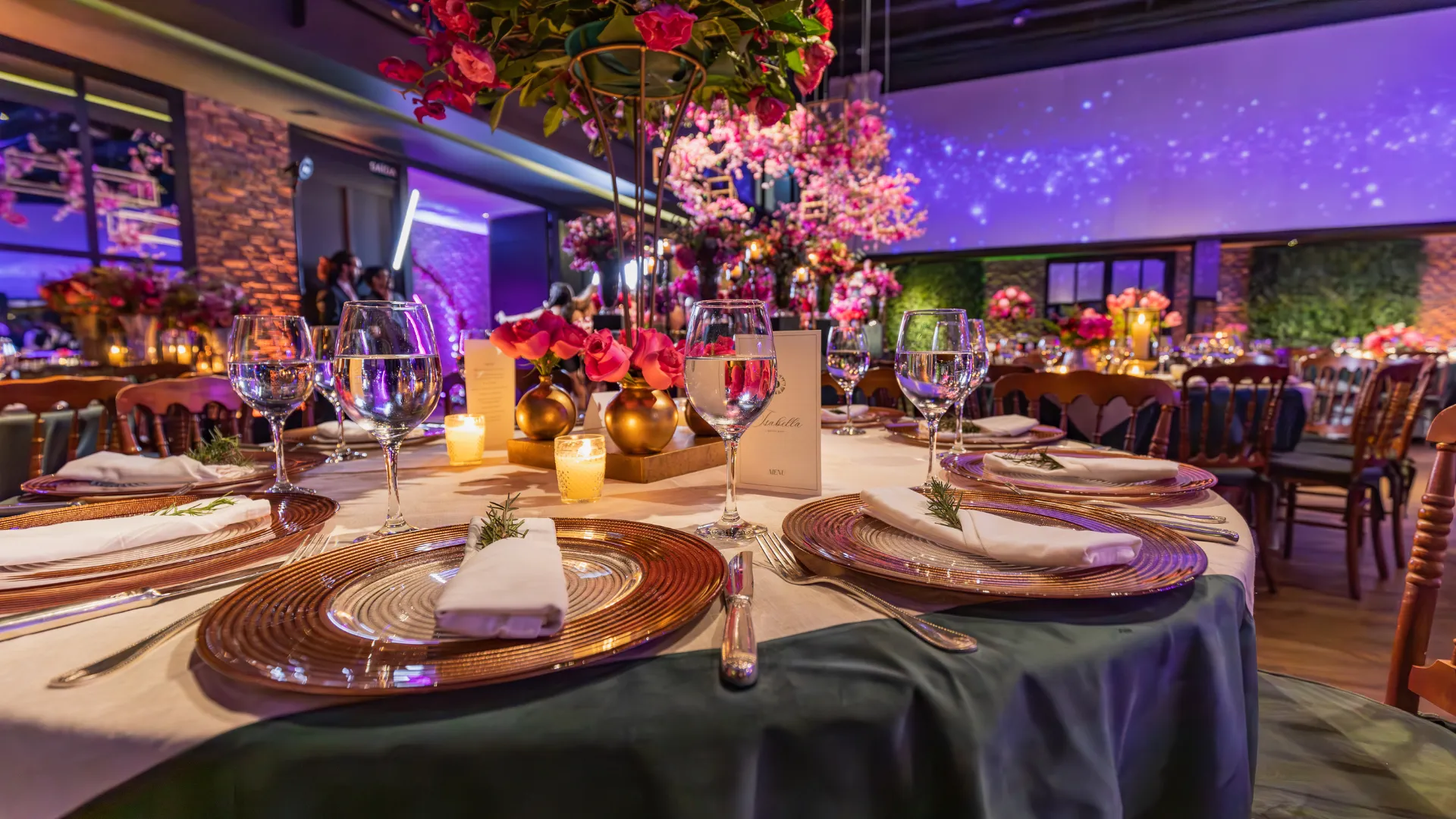

Confirm Venue & Logistics
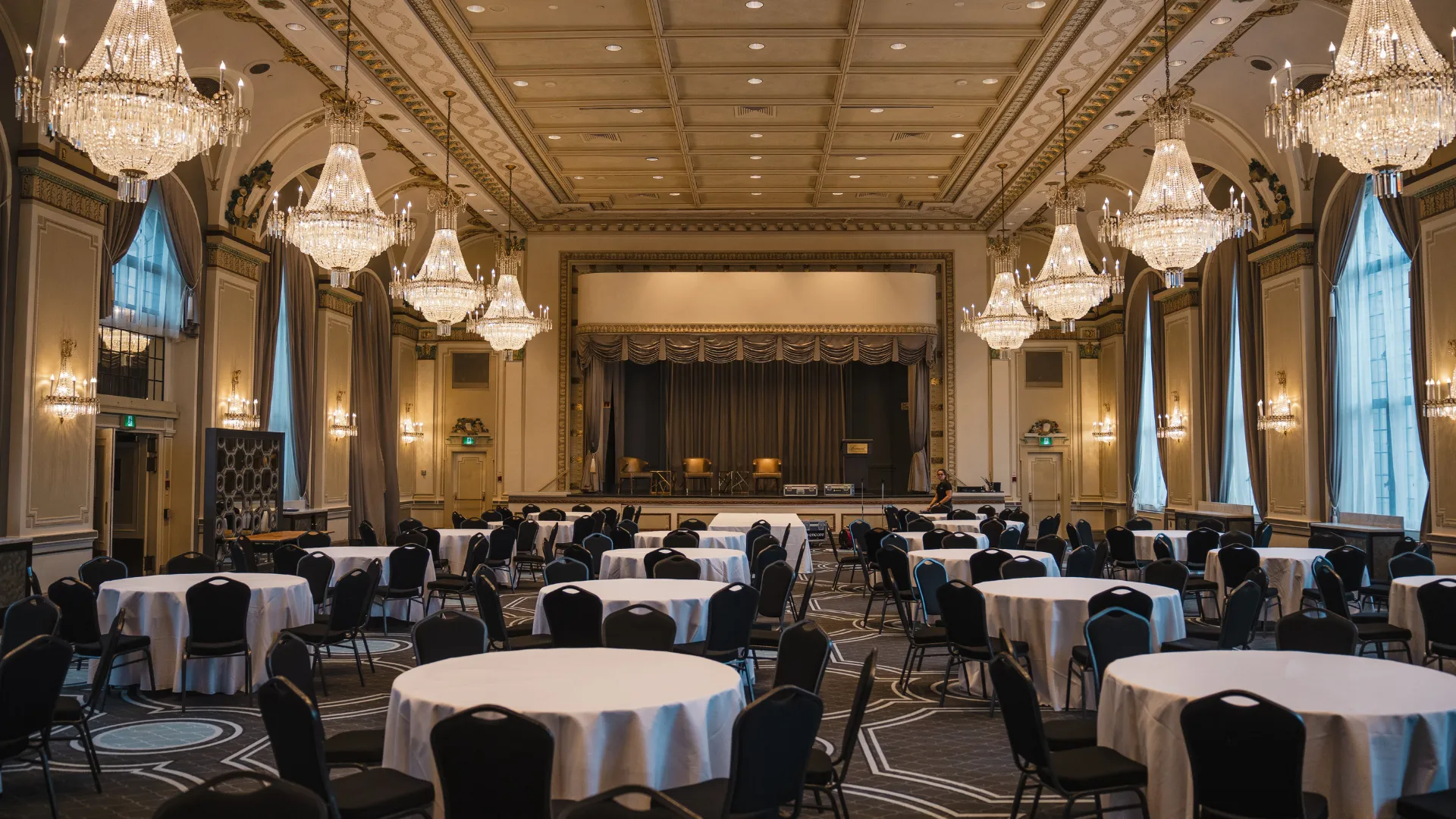
The venue shapes what is possible, in terms of production, layout, and guest experience.
Locking in a venue before understanding production scope creates constraints that are difficult and expensive to resolve later. Evaluate venue and production requirements together.
Venue & Logistics Checklist
- Shortlist venues that match event scale and production requirements.
- Confirm ballroom layout options and stage configuration possibilities.
- Assess existing AV infrastructure and identify gaps.
- Confirm load-in windows for production crews.
- Review parking, transport, and accessibility options.
- Confirm exclusivity of the space on the event date.
For a shortlist of corporate event venues in Singapore suited to gala dinners and awards nights, the venue guide covers key options by format and capacity.
Plan Production Early
Production is the most underestimated element of gala dinner planning, and the one with the greatest impact on guest experience.
Staging, lighting, AV, LED walls, and live cue management are what create the atmosphere guests feel and remember. These elements take time to scope, design, and rehearse.
Late production briefs result in compromised output and reduced options.
Staging
Stage dimensions, configuration, and backdrop design set the visual standard for the evening. Poorly sized staging undermines speaker presence regardless of content quality.
Lighting
Dynamic lighting carries the room through the programme. Transitions from dinner ambience to award spotlights must be designed and rehearsed.
AV and Audio
Ballrooms are acoustically difficult. PA design, microphone management, and room tuning ensure every speech and entertainment segment is heard clearly.
LED Walls and Visual Content
Awards presentations, brand videos, speaker introductions, and lower thirds must be produced and loaded before event day.
Live Cue Management
Every transition, music, video playback, lighting change, and mic handover, needs a cue caller coordinating across crew in real time.
Production Checklist
- Brief the production vendor when venue search begins.
- Confirm stage configuration and dimensions early.
- Scope lighting design across all programme segments.
- Confirm PA specification for ballroom size and layout.
- Identify visual content requirements including videos, graphics, and lower thirds.
- Produce and load all visual content ahead of technical rehearsal.
- Schedule technical rehearsal with full crew before event day.
- Confirm cue sheet and run-of-show with the production team.
ERS Asia manages event production in Singapore for gala dinners, awards nights, and corporate celebrations, covering staging, AV, lighting, and full live coordination.
Common Gala Dinner Planning Mistakes
These issues consistently affect events across budget levels and company sizes.
Creating Memorable Gala Dinner Experiences
The details guests remember most are rarely on the checklist, the moment the room lit up for the first award, the transition that felt seamless, the entertainment that landed exactly right.
Those moments are the product of deliberate planning and experienced execution.
ERS Asia supports corporate event management in Singapore across gala dinners, awards nights, appreciation events, and corporate celebrations. See our work for examples of how we approach planning and production across event types.
Frequently Asked Questions
How far in advance should a gala dinner be planned?
For events with complex production, entertainment, or large guest counts, 10–14 weeks is advisable. Smaller gala dinners can be executed in 6–8 weeks with experienced production support in place from the start.
What should be included in a gala dinner checklist?
Event objective, guest experience planning, venue and logistics confirmation, event flow and run-of-show, production scope, entertainment brief, and a technical rehearsal schedule.
Do gala dinners require professional production?
For events with awards segments, structured entertainment, or a formal atmosphere, yes. Staging, lighting, AV, and cue management are what create the premium feel, and these require proper planning and rehearsal.
How long does a gala dinner usually last?
Most corporate gala dinners run between three and five hours, covering reception, dinner service, awards or entertainment, and networking.
What makes a successful gala dinner?
A clear objective, strong event flow, quality production, the right entertainment for the audience, and experienced coordination on the night. The most common failure point is treating production as an afterthought rather than a primary planning priority.
Table of Contents
Related Articles